How might we make unfamiliar repair services feel transparent and safe to choose?
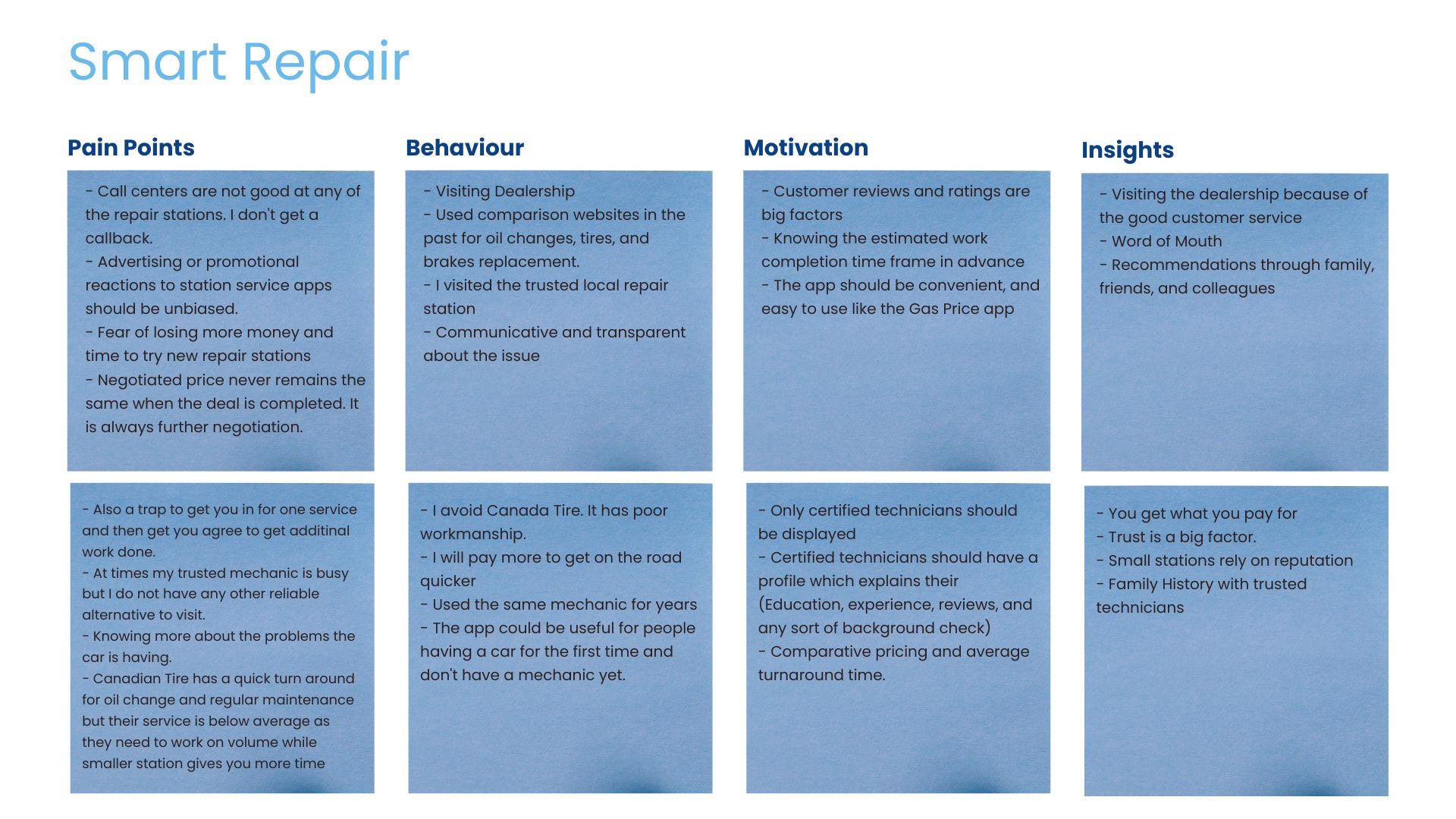
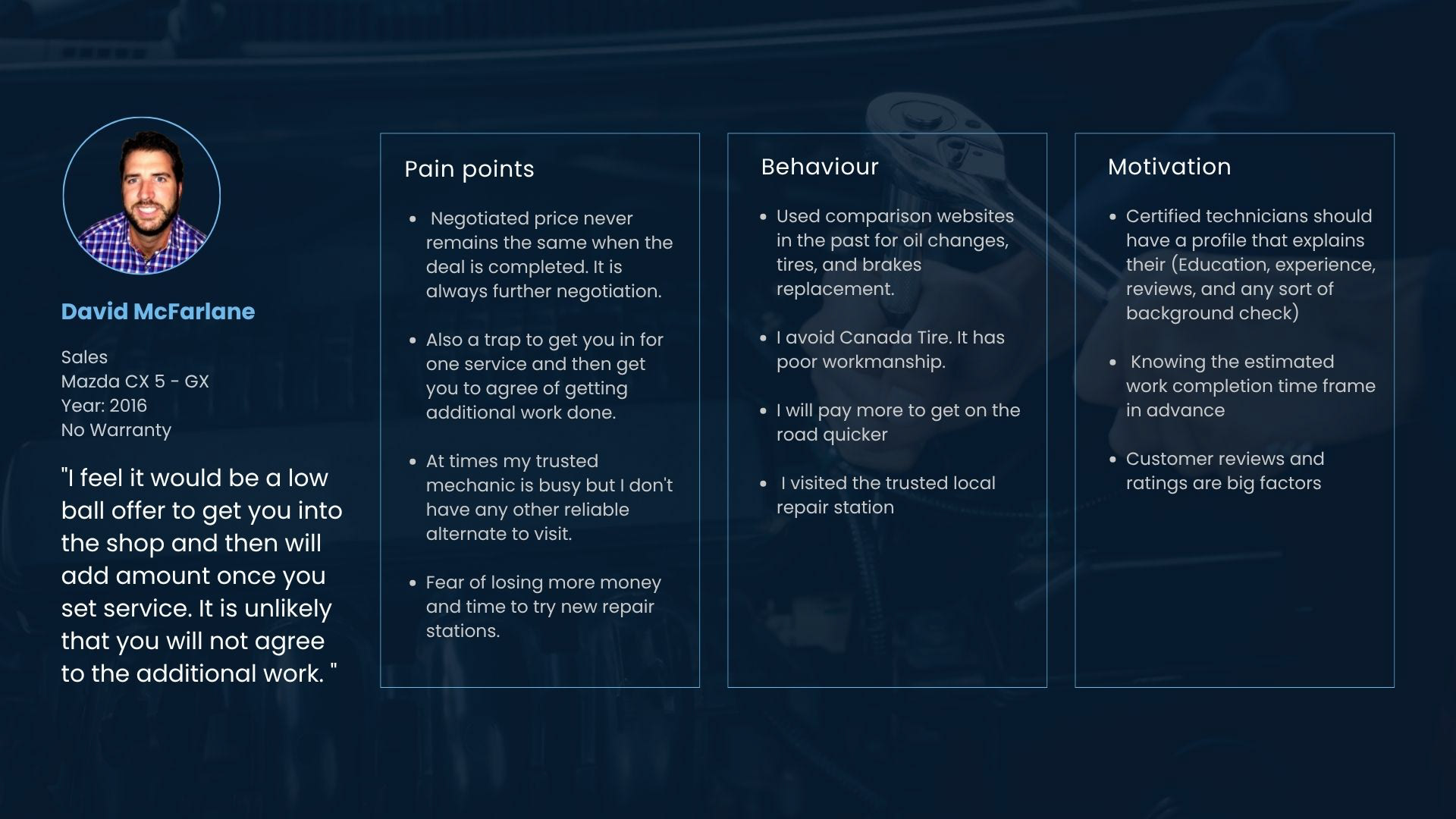
Users needed enough comparable information to move beyond word-of-mouth without taking on more financial or service risk.
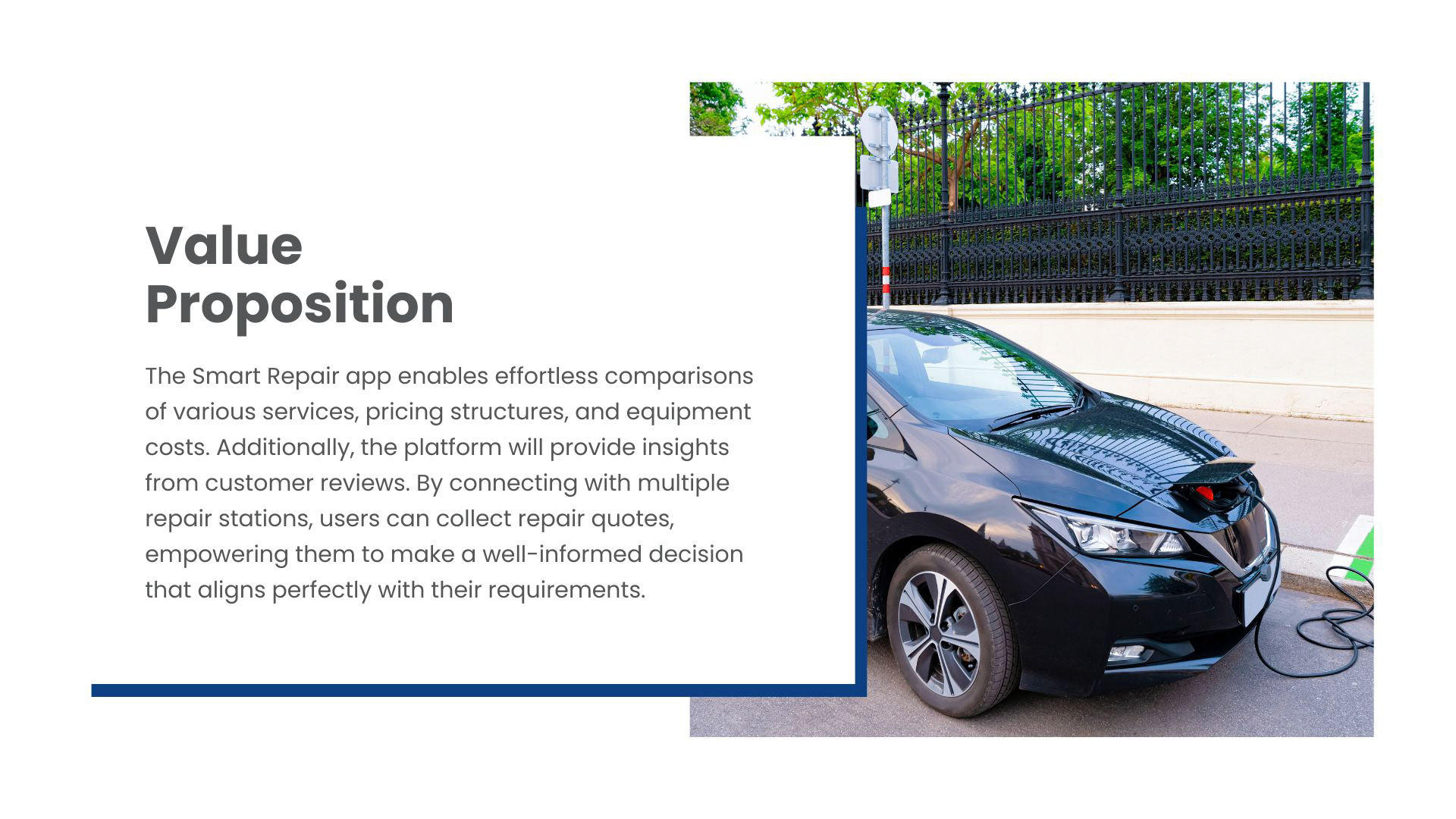
A vehicle-service comparison experience designed to help out-of-warranty car owners evaluate technicians, costs, turnaround time, and trust signals before committing to a repair.
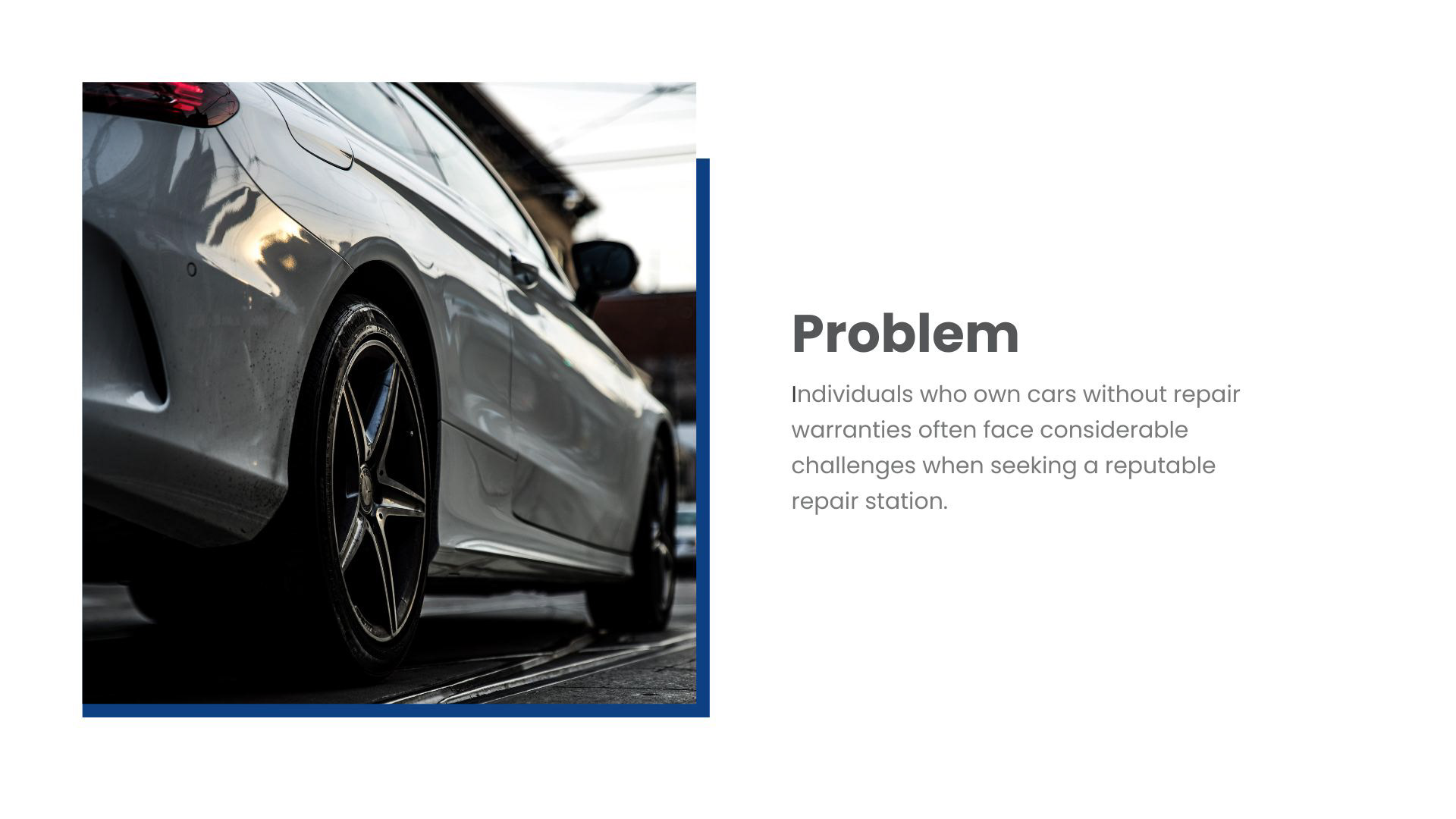
Repair decisions are high-stakes, often urgent, and difficult to compare. This concept brings fragmented information into one mobile flow so drivers can understand their options before contacting a shop.
The opportunity was not simply to list mechanics. It was to support a confident decision when price, quality, availability, and credibility are all unclear.
Users needed enough comparable information to move beyond word-of-mouth without taking on more financial or service risk.
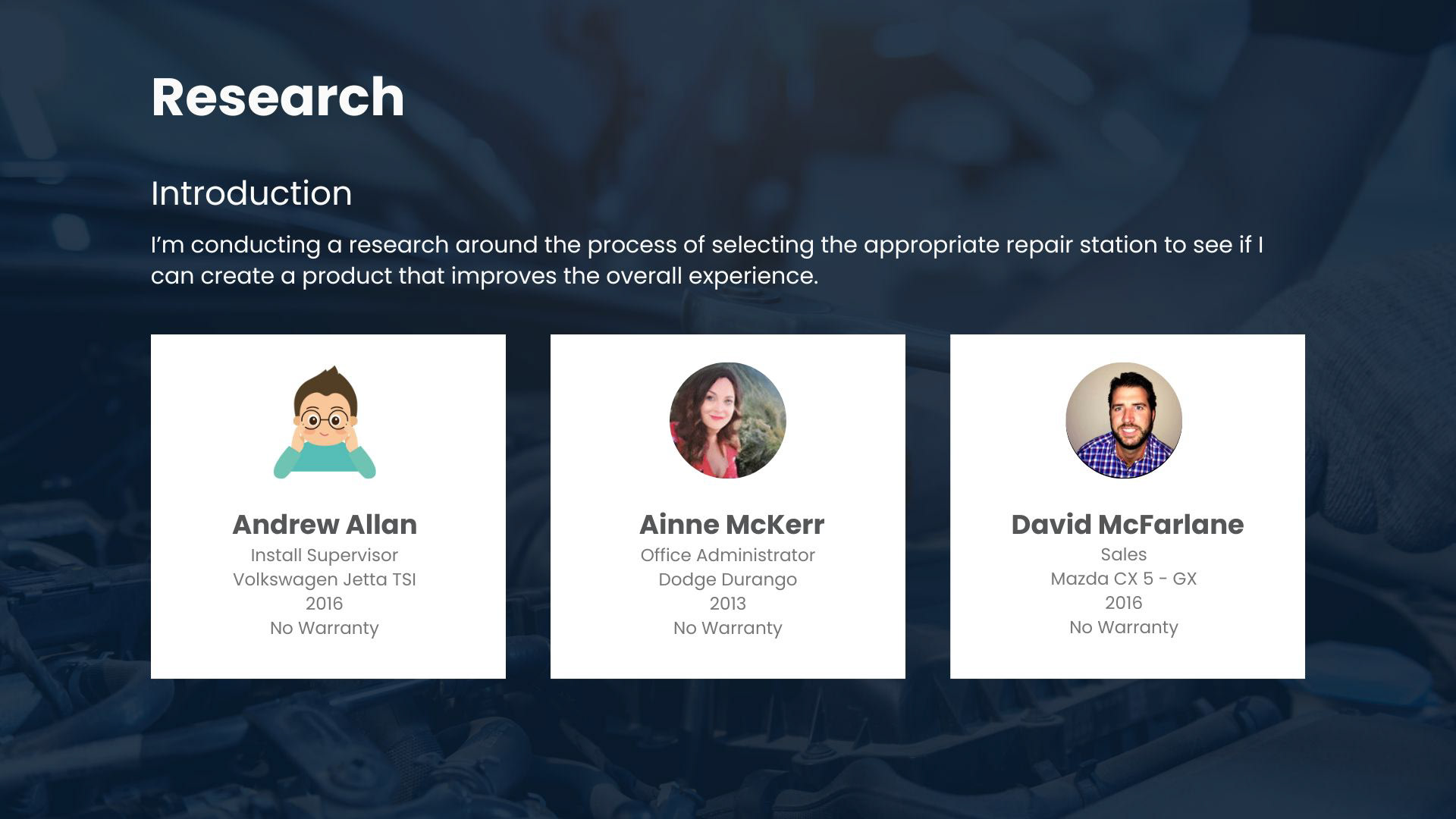
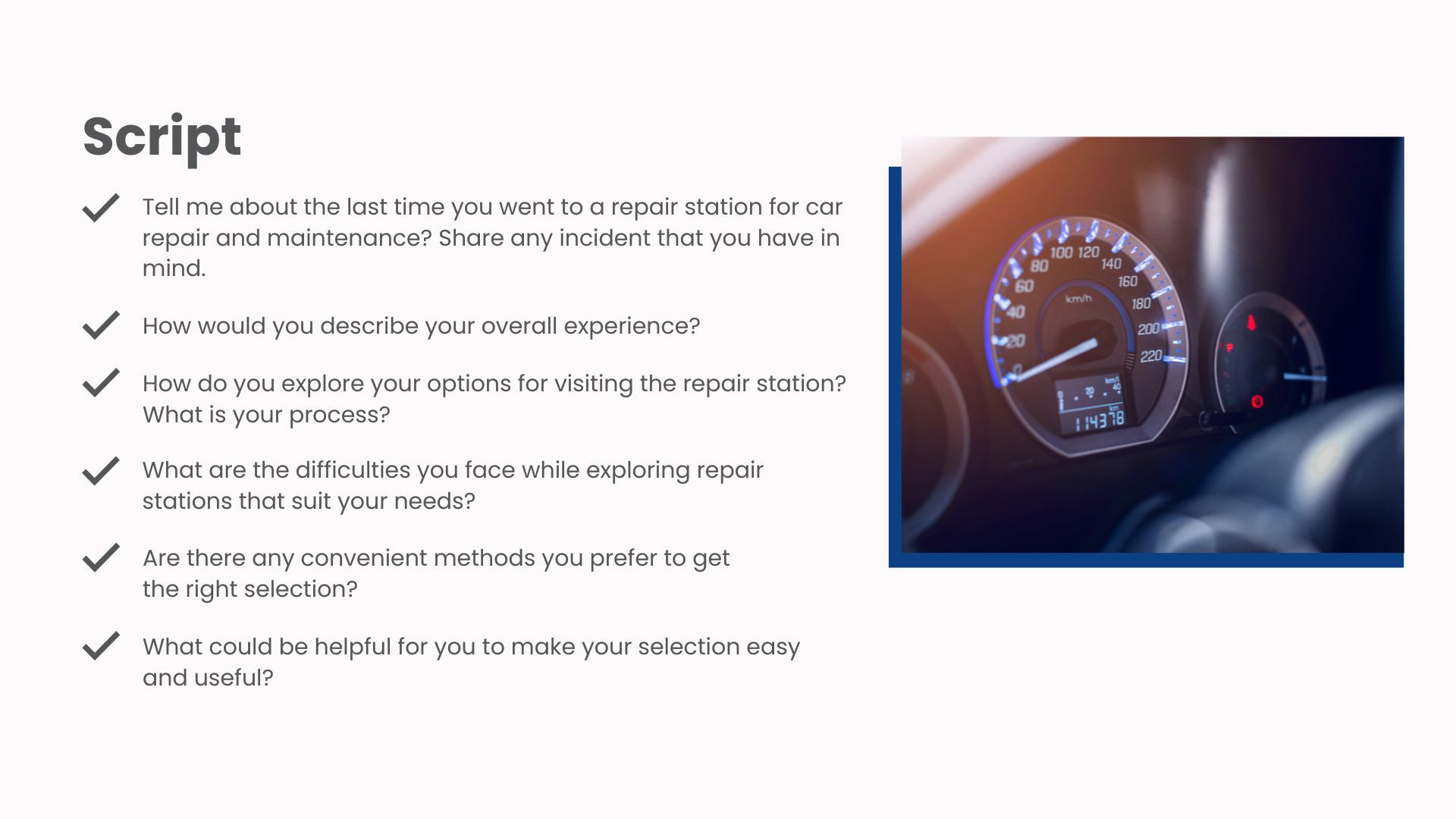
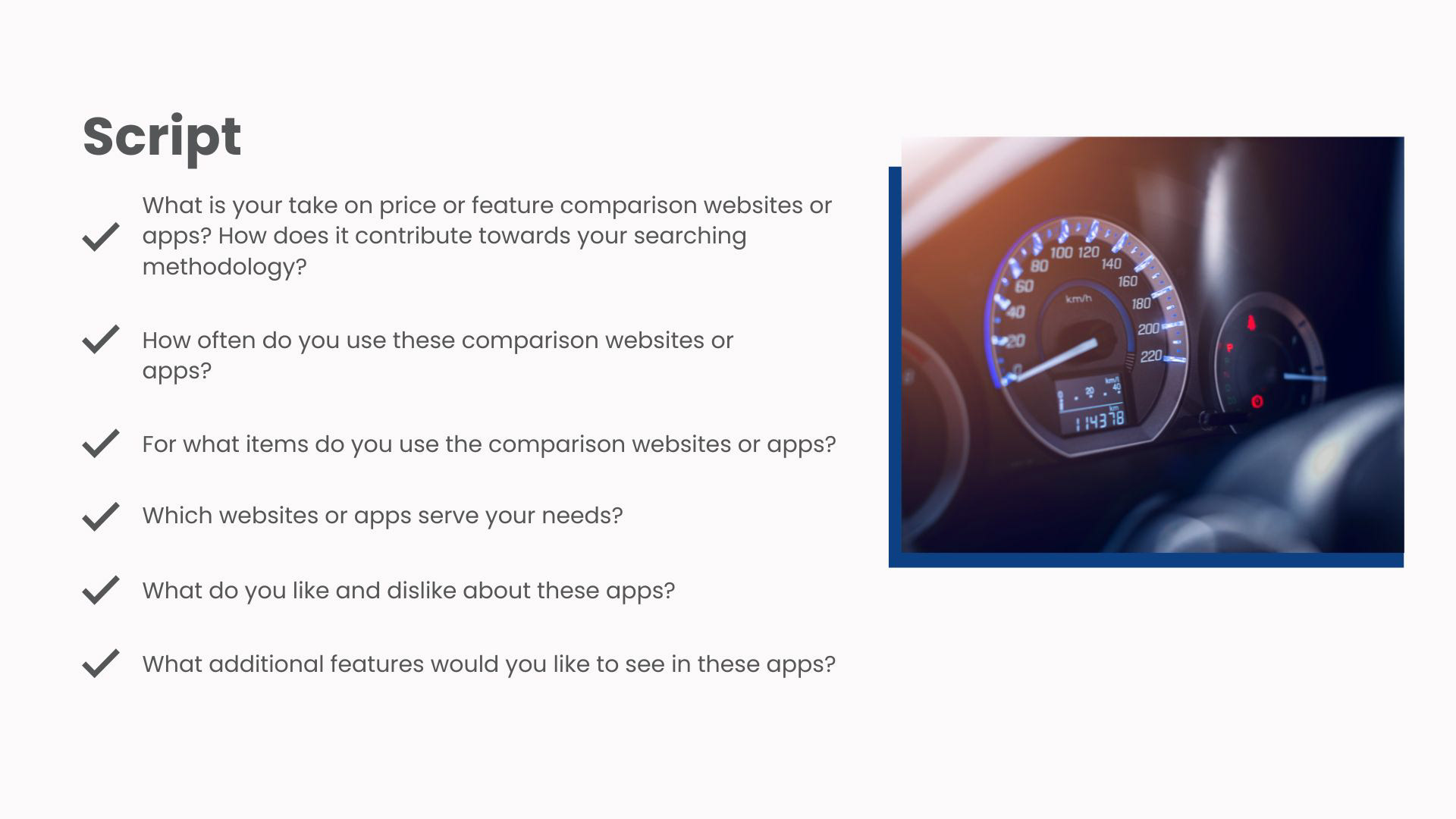
Three out-of-warranty vehicle owners were interviewed about their latest repair experience, how they evaluate shops, and how comparison tools influence their choices.
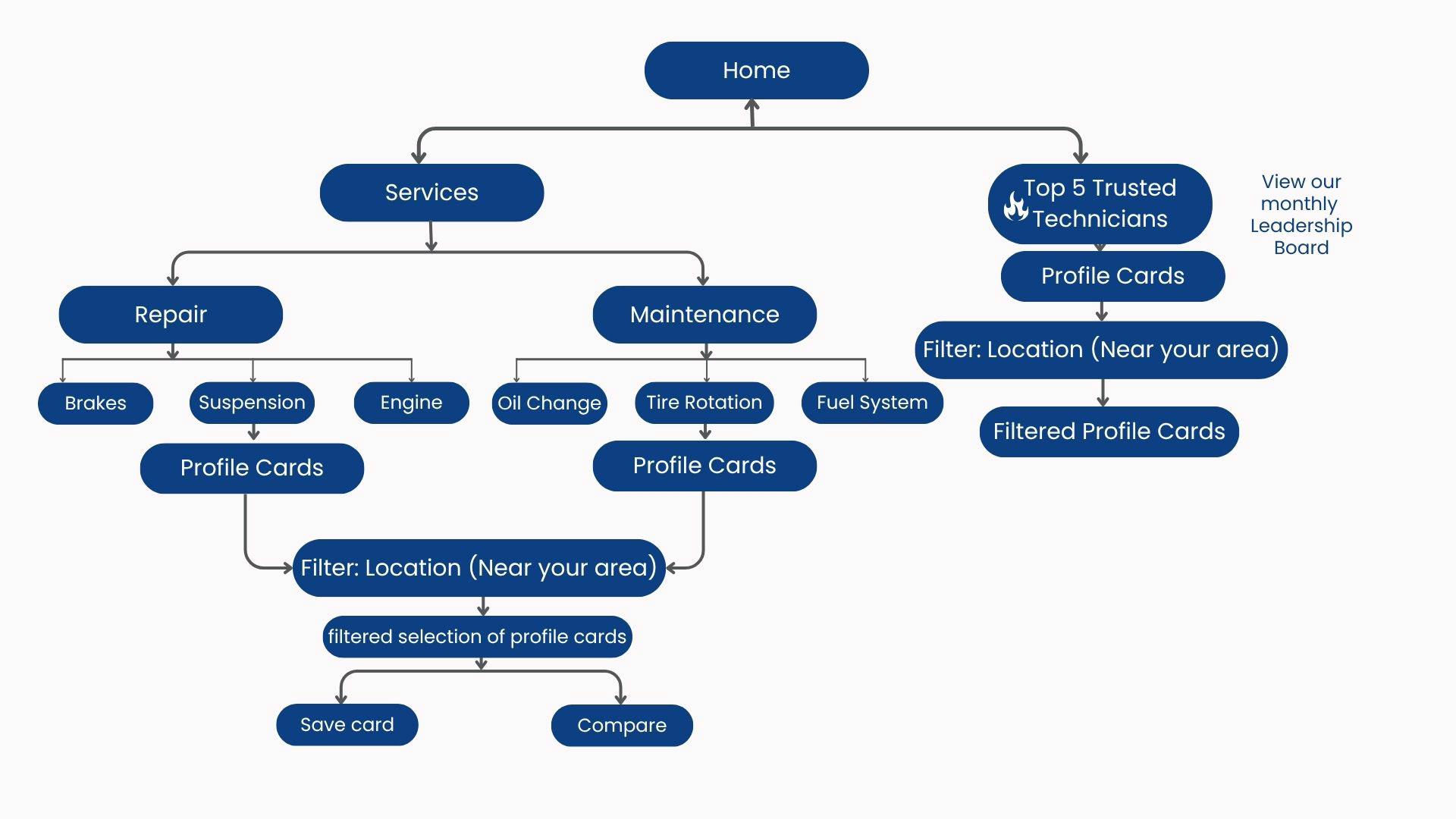
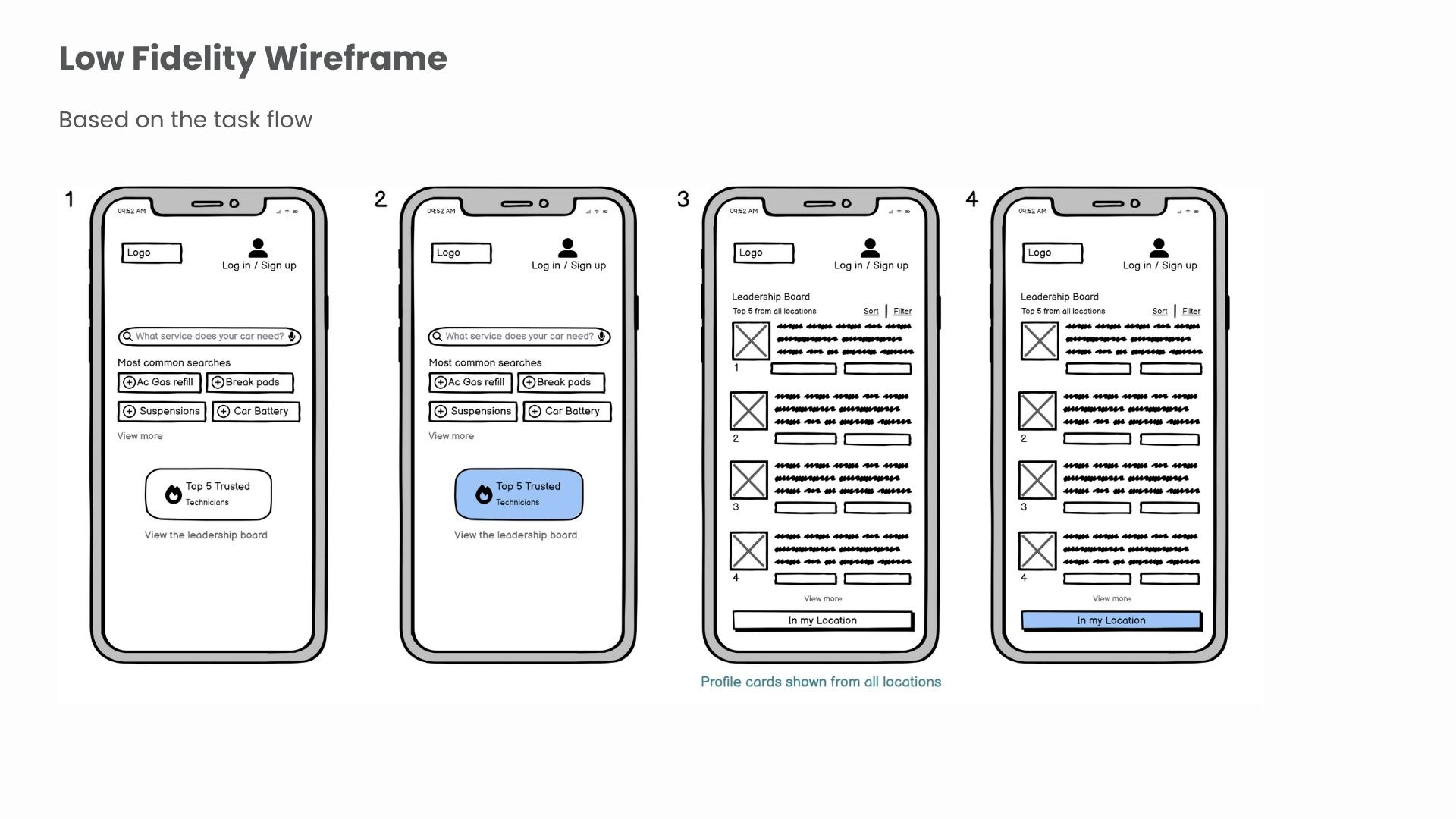
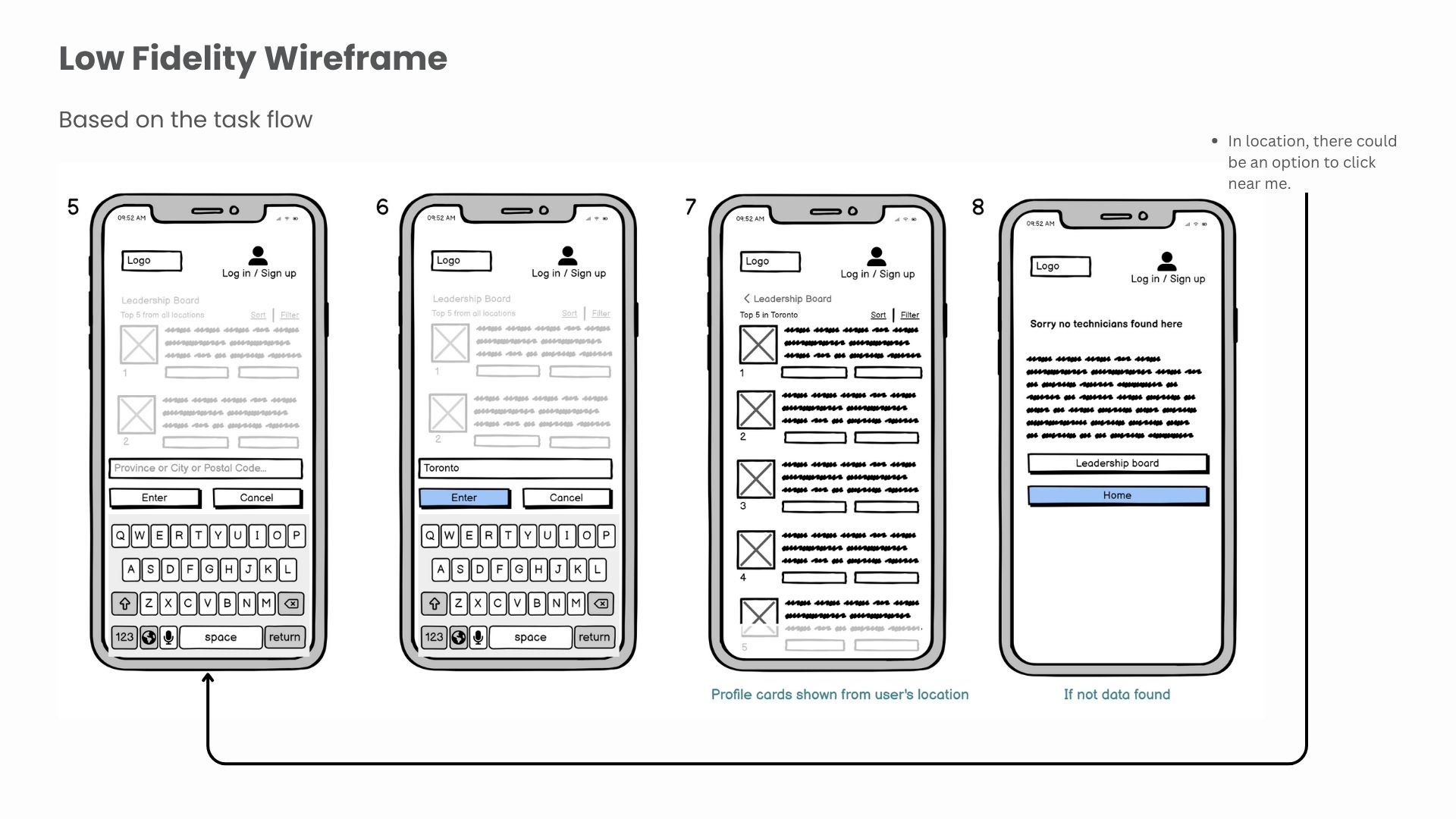
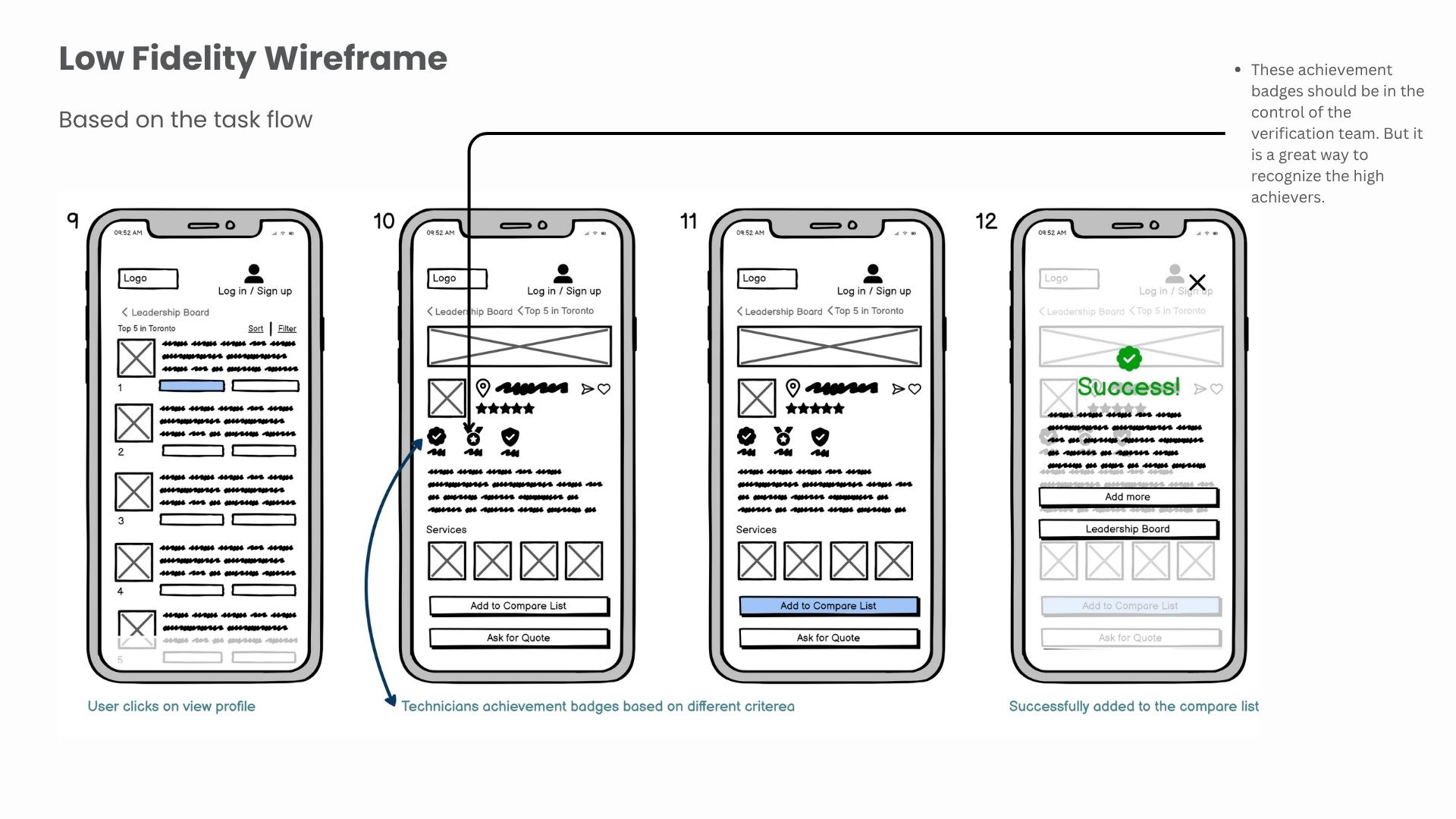
The information architecture supported service-led discovery and a trust-led “Top 5 Technicians” route. Both paths converged on location-aware profiles that users could save or compare.
Some drivers know the service they need; others only know they want a reputable technician. The home screen gives both mental models a direct starting point.
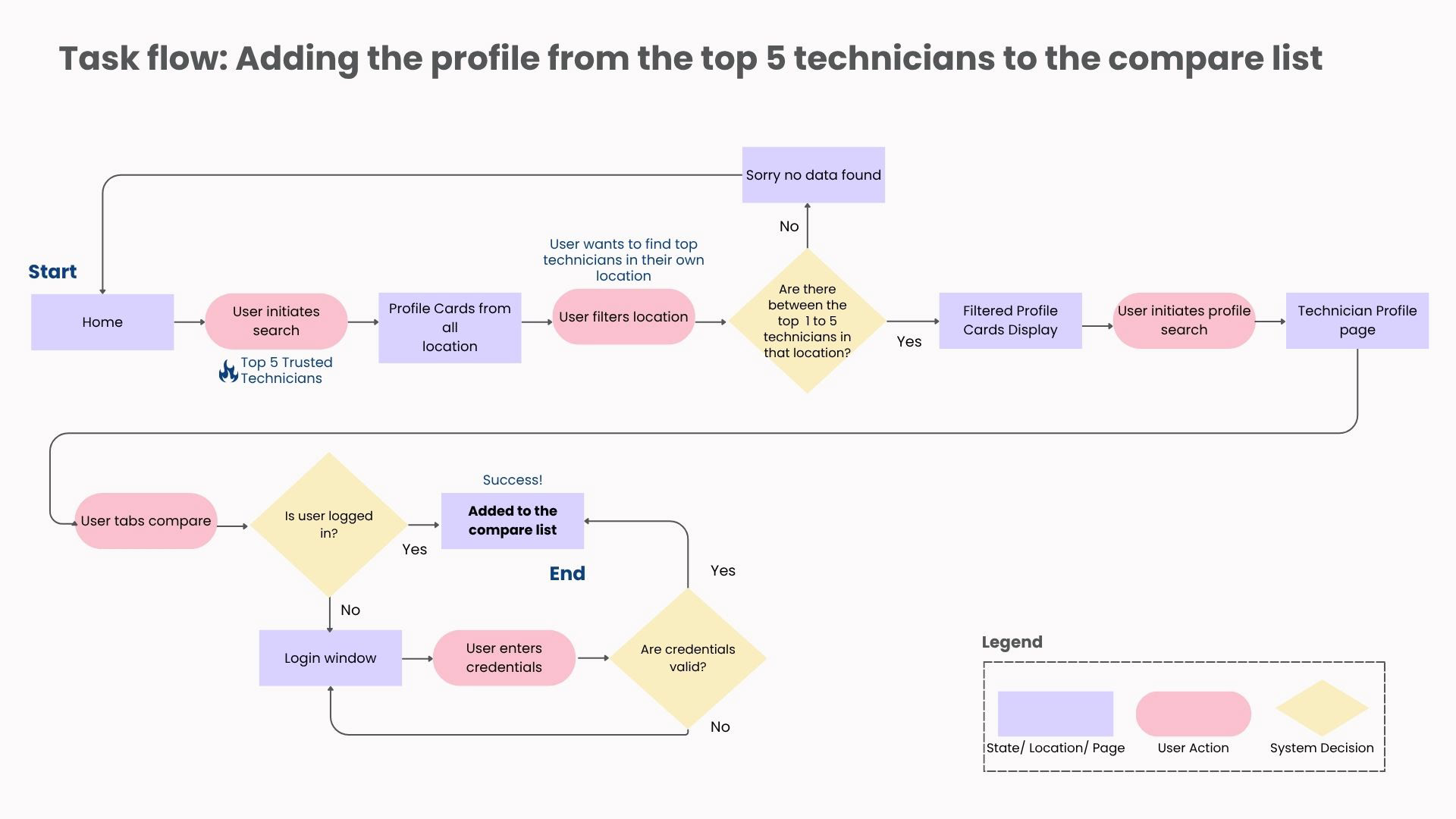
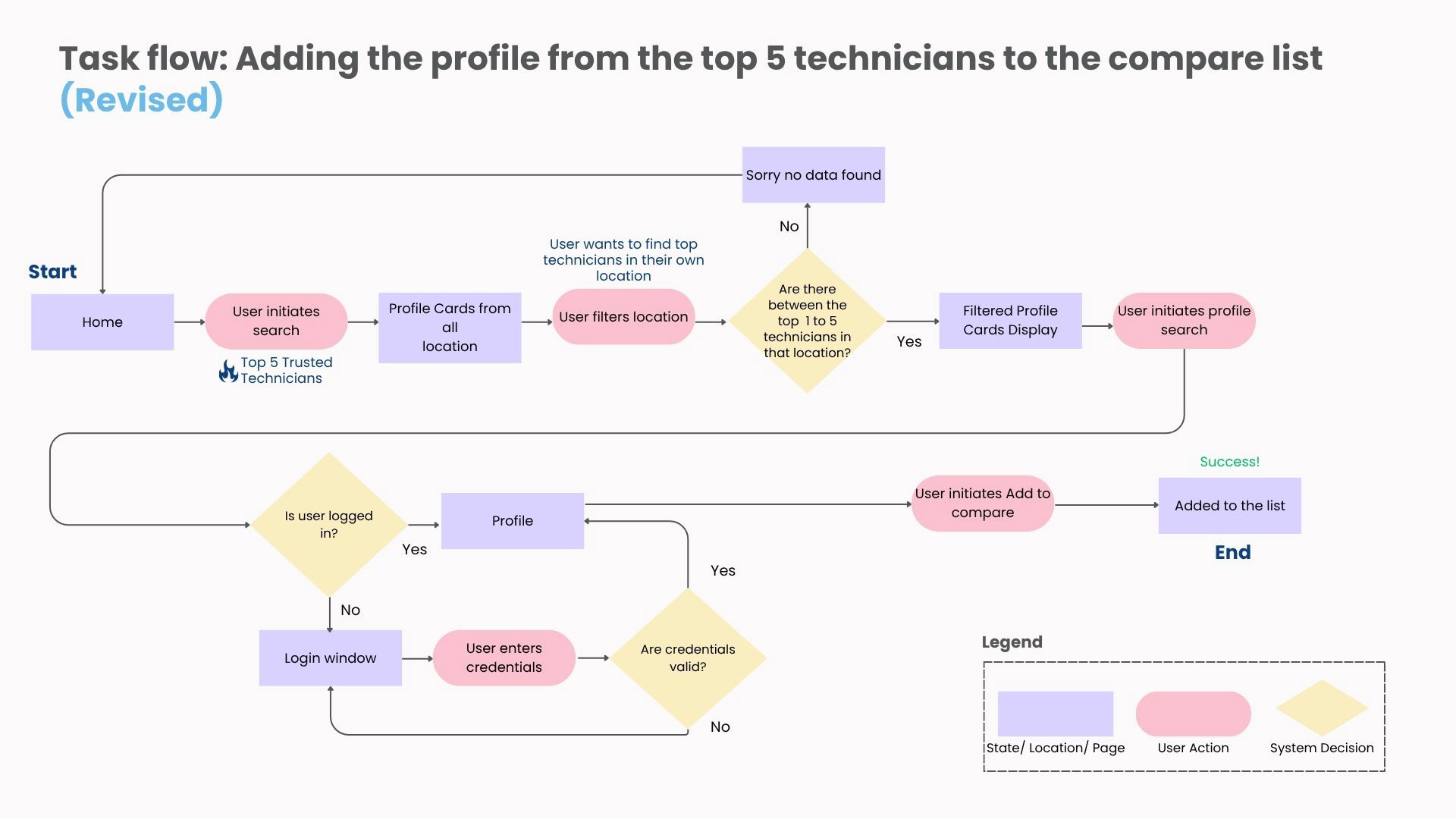
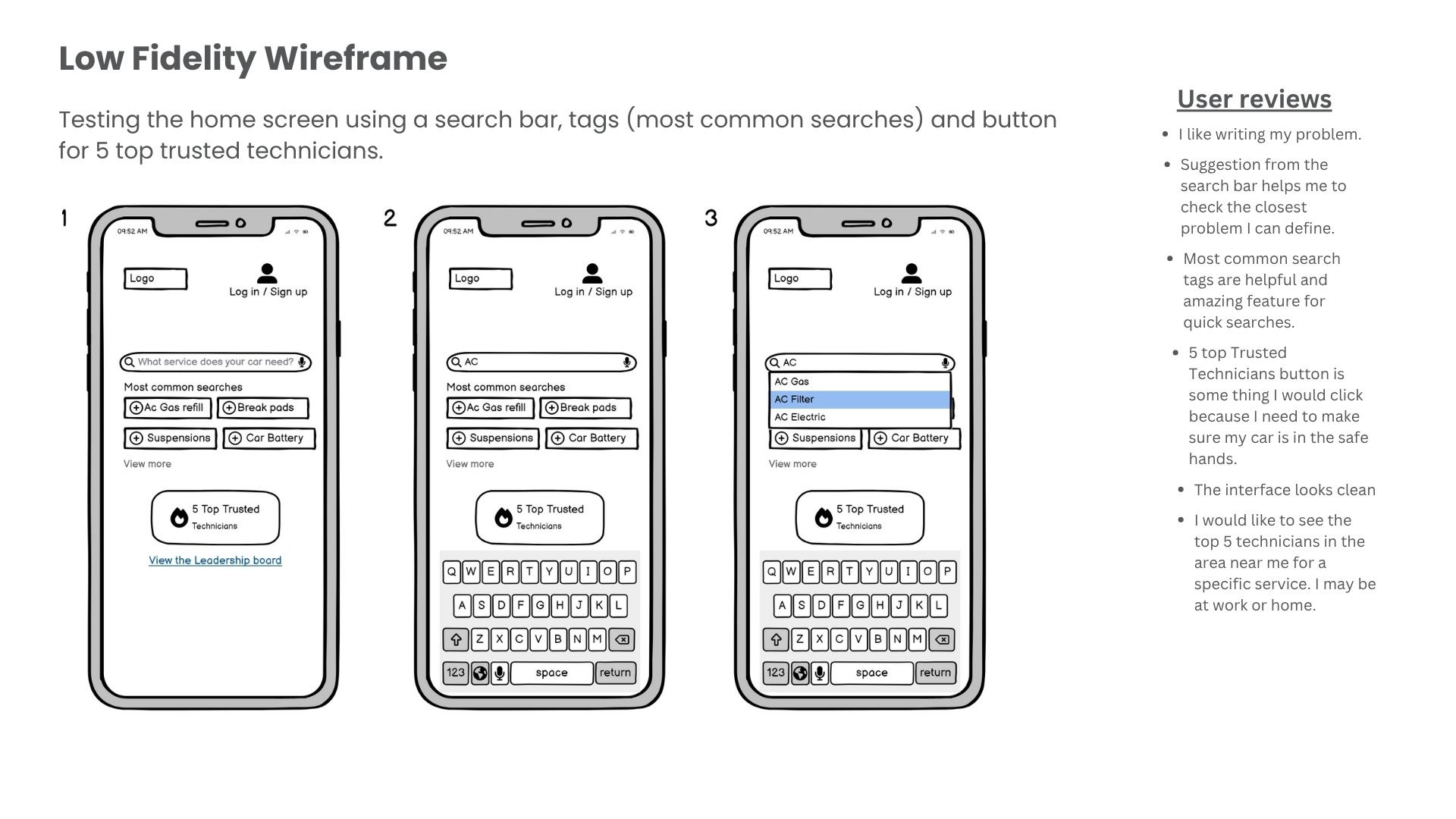
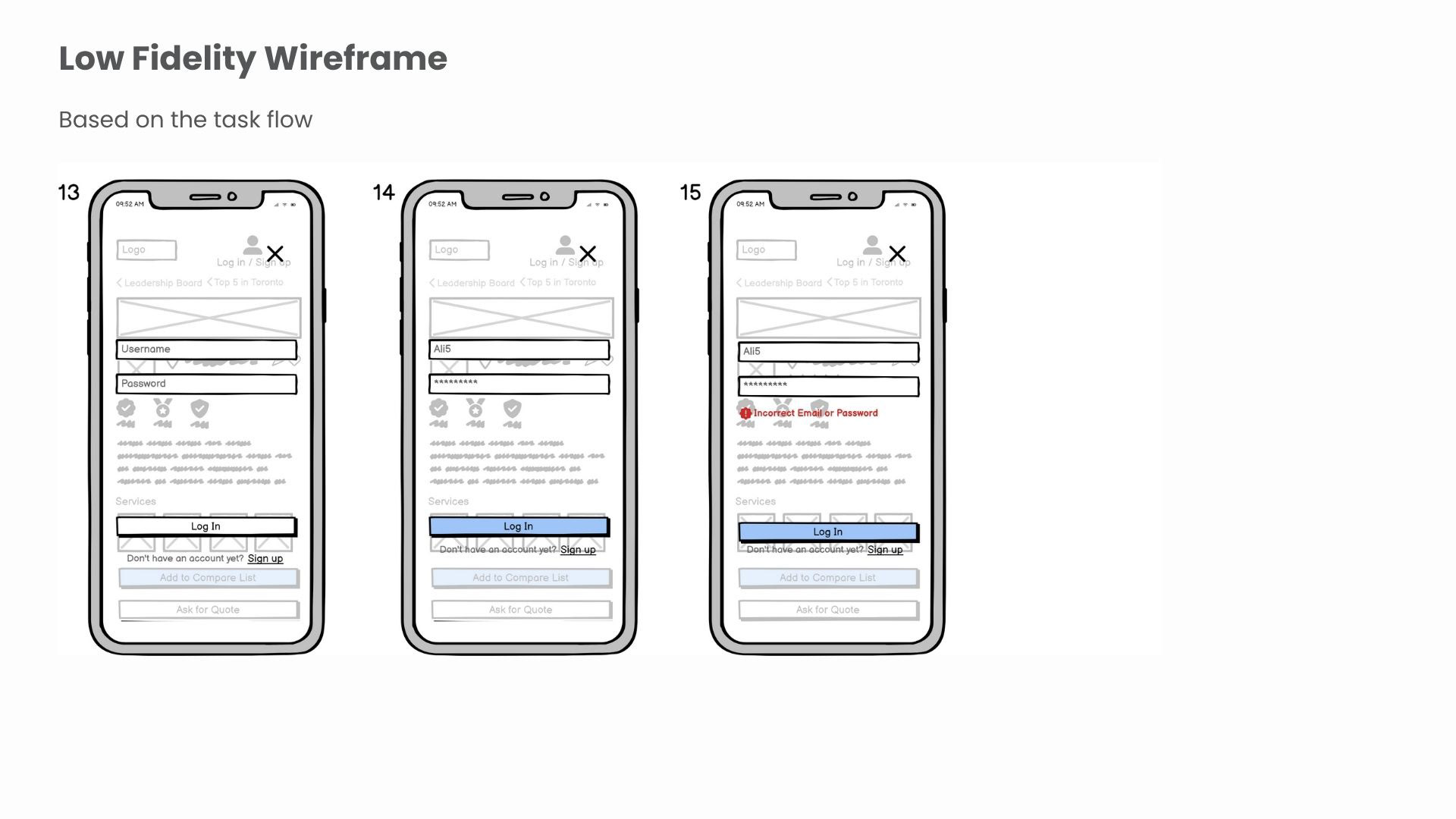
The low-fidelity prototype moved from home-page discovery through location filtering, technician profiles, comparison, and authentication states. Feedback informed clearer search suggestions, quick-service tags, location controls, and verified achievement badges.
The visual system uses a dark automotive palette, high-contrast actions, familiar service shortcuts, ranked technician cards, and progressive disclosure for location and login.
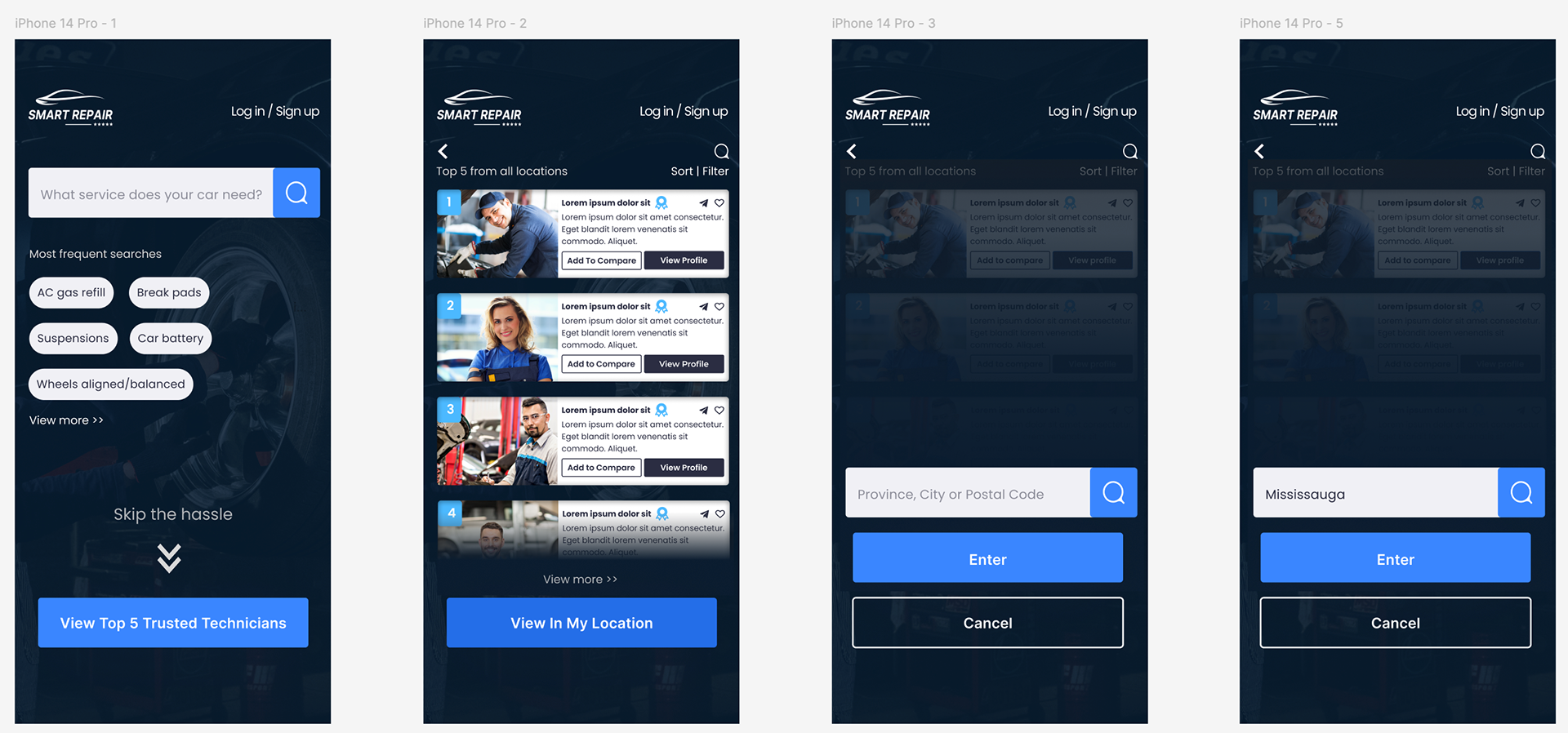
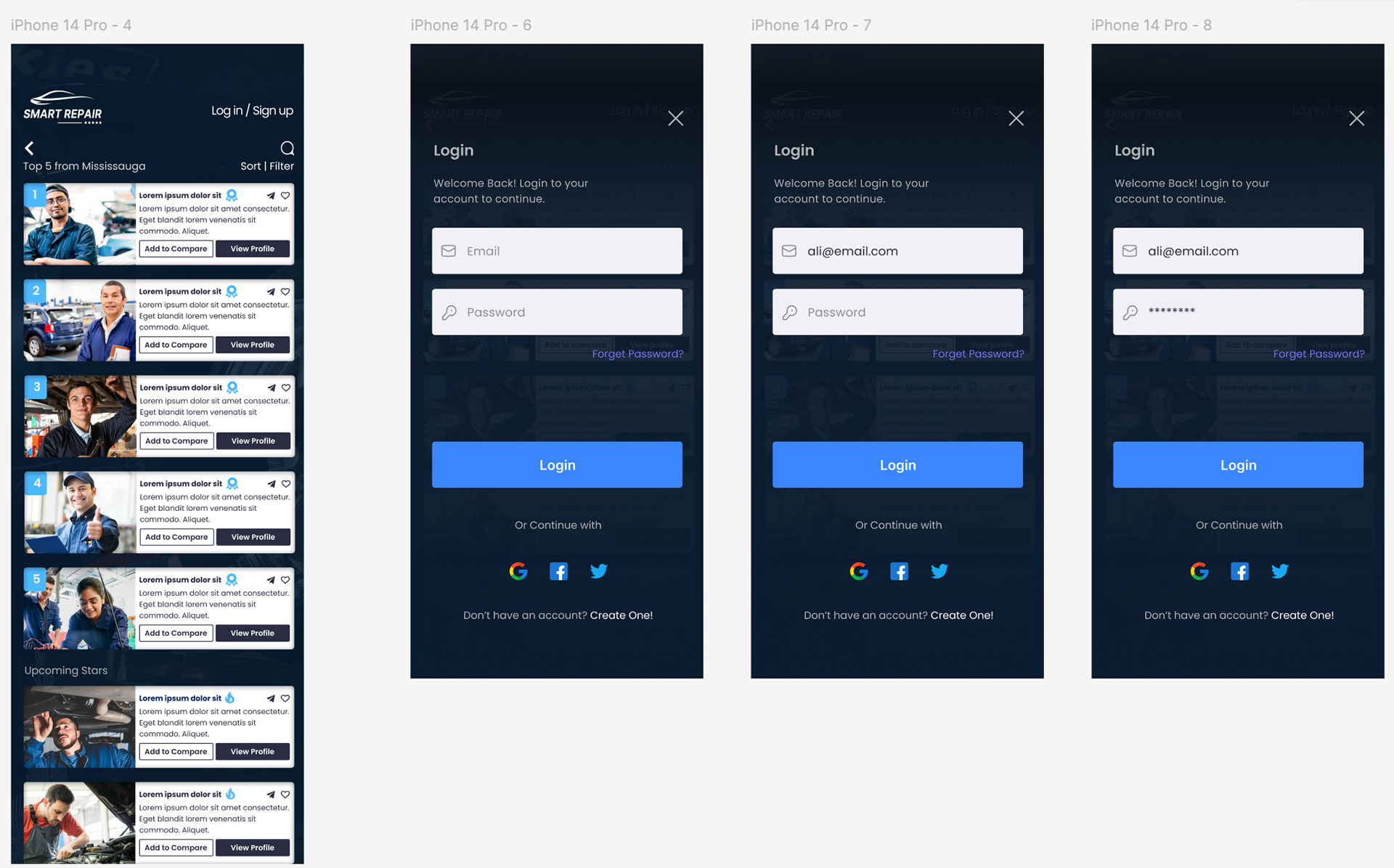
The concept turns repair discovery into a more legible decision: users can begin with a need, compare structured provider information, narrow by location, and preserve promising options.