UX/UI Case Study · Mobile Concept

Smart Repair

A vehicle-service comparison experience designed to help out-of-warranty car owners evaluate technicians, costs, turnaround time, and trust signals before committing to a repair.

Smart Repair · interactive product walkthrough
Explore the repair-comparison flow Search, filter, and compare technicians · Open full-screen demo ↗
Project overview

Making an uncertain decision easier to trust

Repair decisions are high-stakes, often urgent, and difficult to compare. This concept brings fragmented information into one mobile flow so drivers can understand their options before contacting a shop.

Role
UX/UI Designer & Researcher
Scope
Research, synthesis, flows, wireframes, UI, prototype
Audience
Out-of-warranty vehicle owners
Status
End-to-end mobile product concept
01 · Frame the problem

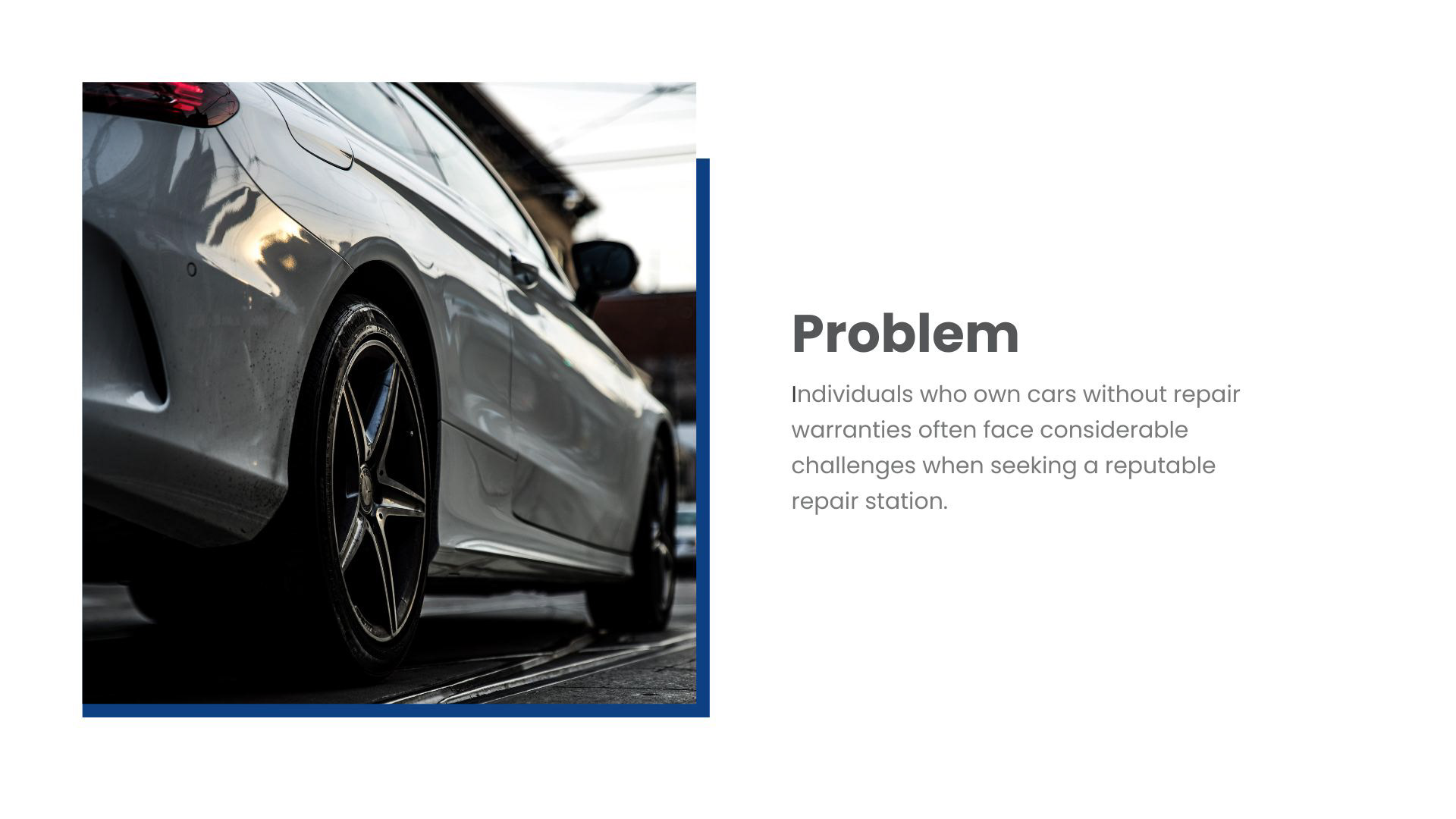
Drivers lacked a dependable way to compare repair options

The opportunity was not simply to list mechanics. It was to support a confident decision when price, quality, availability, and credibility are all unclear.

Problem statement

How might we make unfamiliar repair services feel transparent and safe to choose?

Users needed enough comparable information to move beyond word-of-mouth without taking on more financial or service risk.
Design response

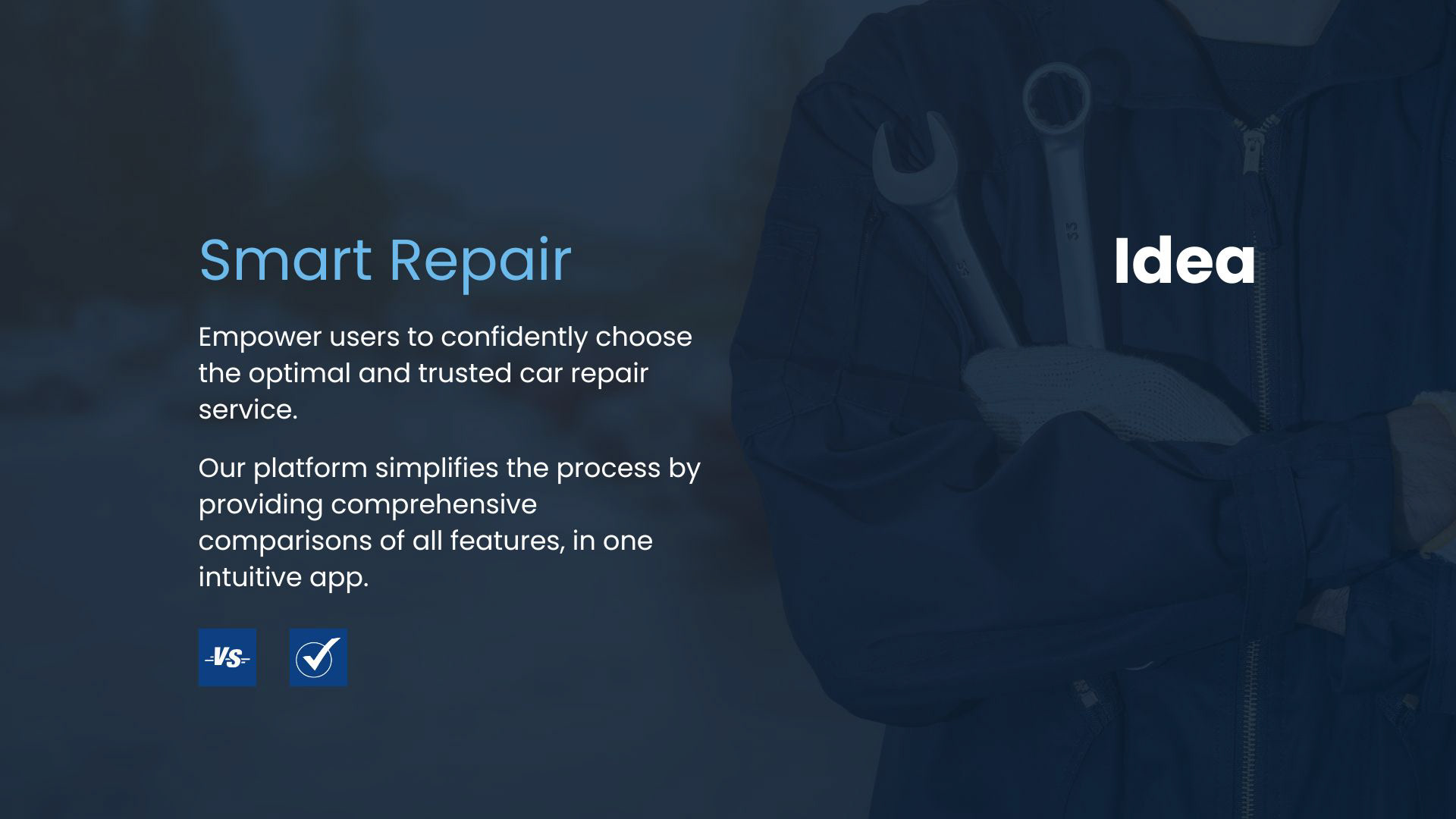
Bring decision-critical signals into one flow

01
Compare consistentlyPresent services, estimated pricing, and turnaround time using the same structure.
02
Build credibilitySurface certification, background, reviews, ratings, and achievement signals.
03
Reduce search effortUse common-service shortcuts, location filtering, saved profiles, and comparison lists.
Original Smart Repair problem framing board
Original problem framingSource case-study board
Original Smart Repair idea board
Initial product ideaComparison as the core model
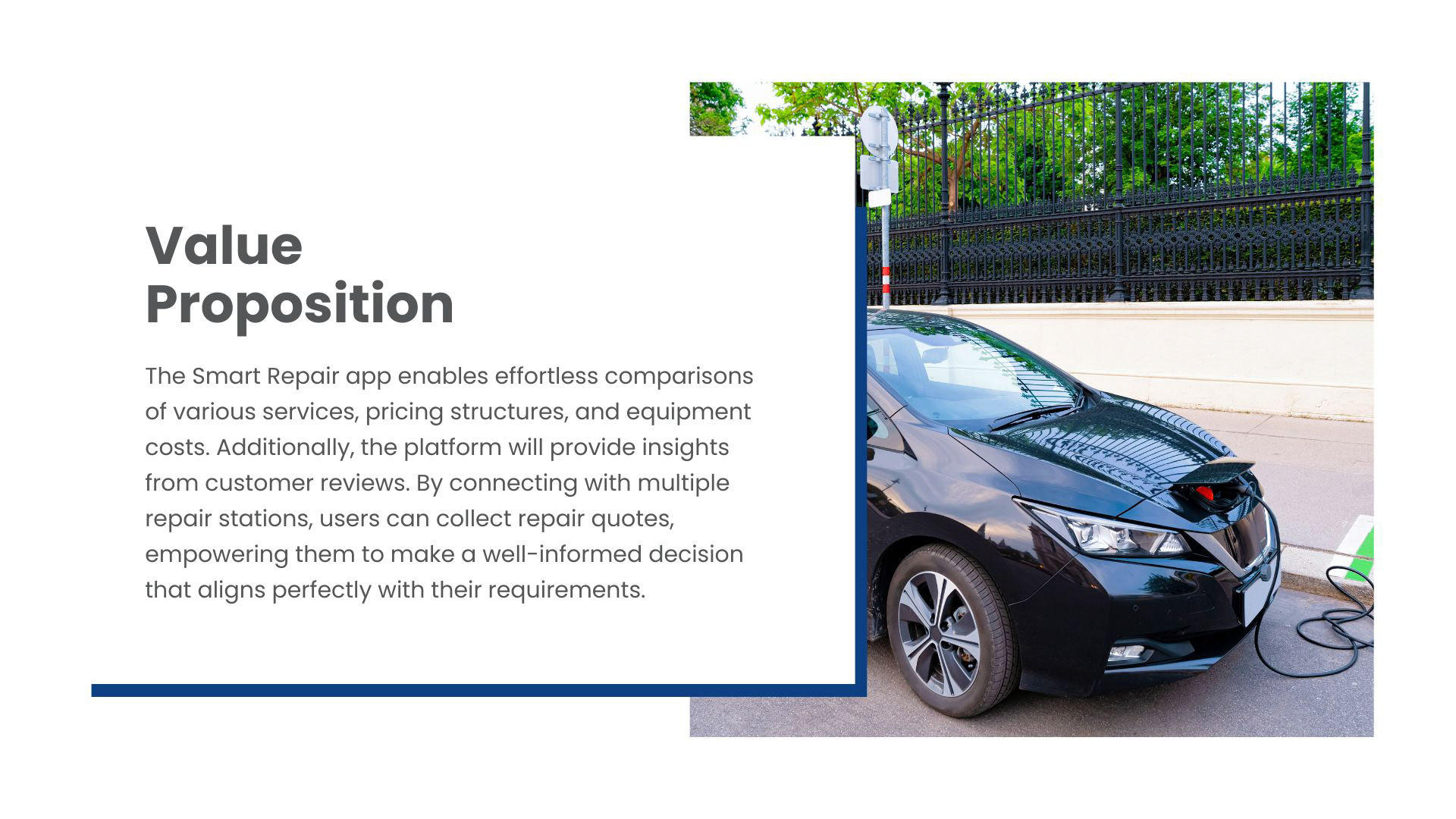
Original Smart Repair value proposition board
Value propositionQuotes, costs, reviews, and service information in one place
02 · Understand the decision

Three exploratory interviews shaped the comparison concept

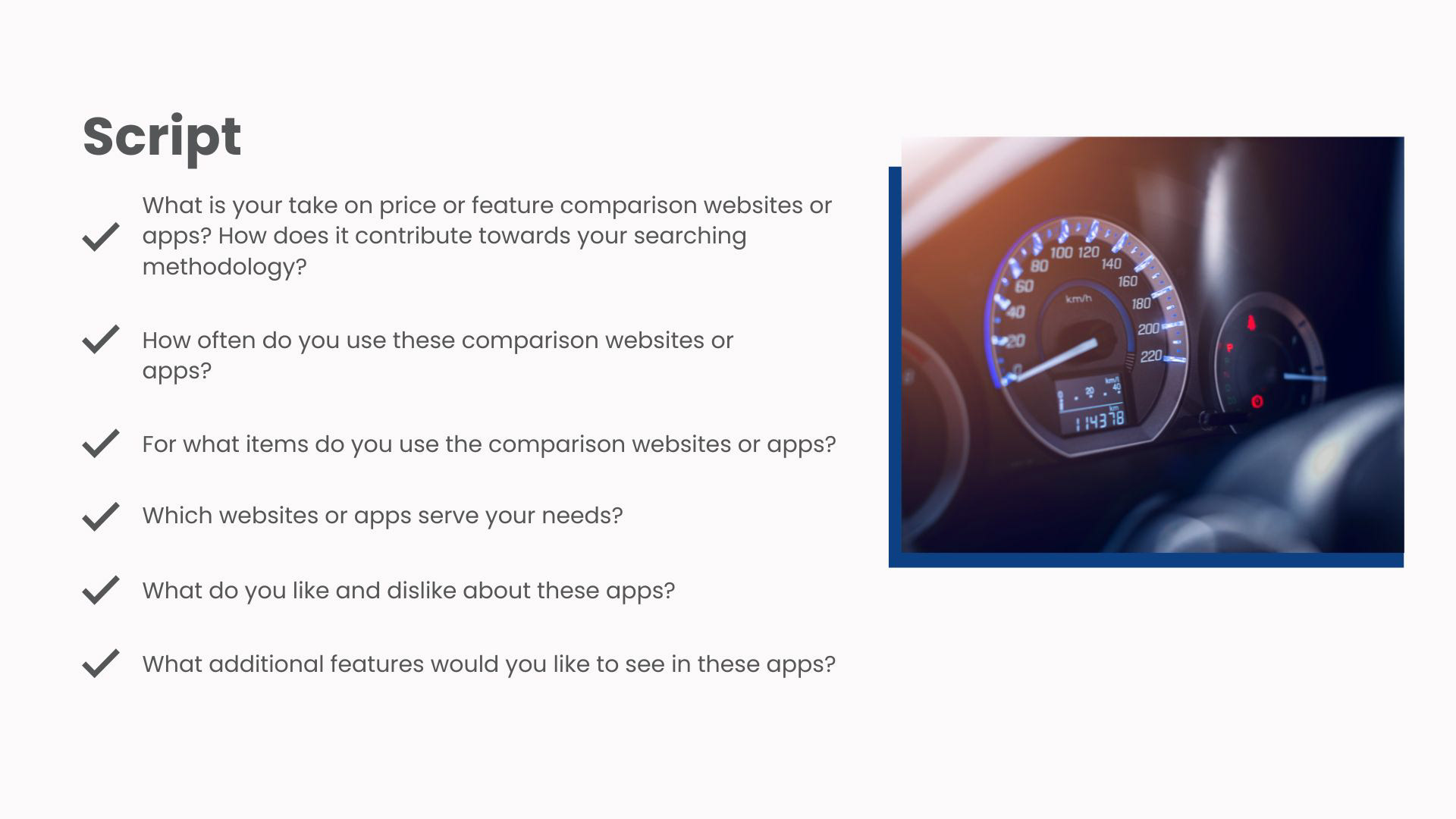
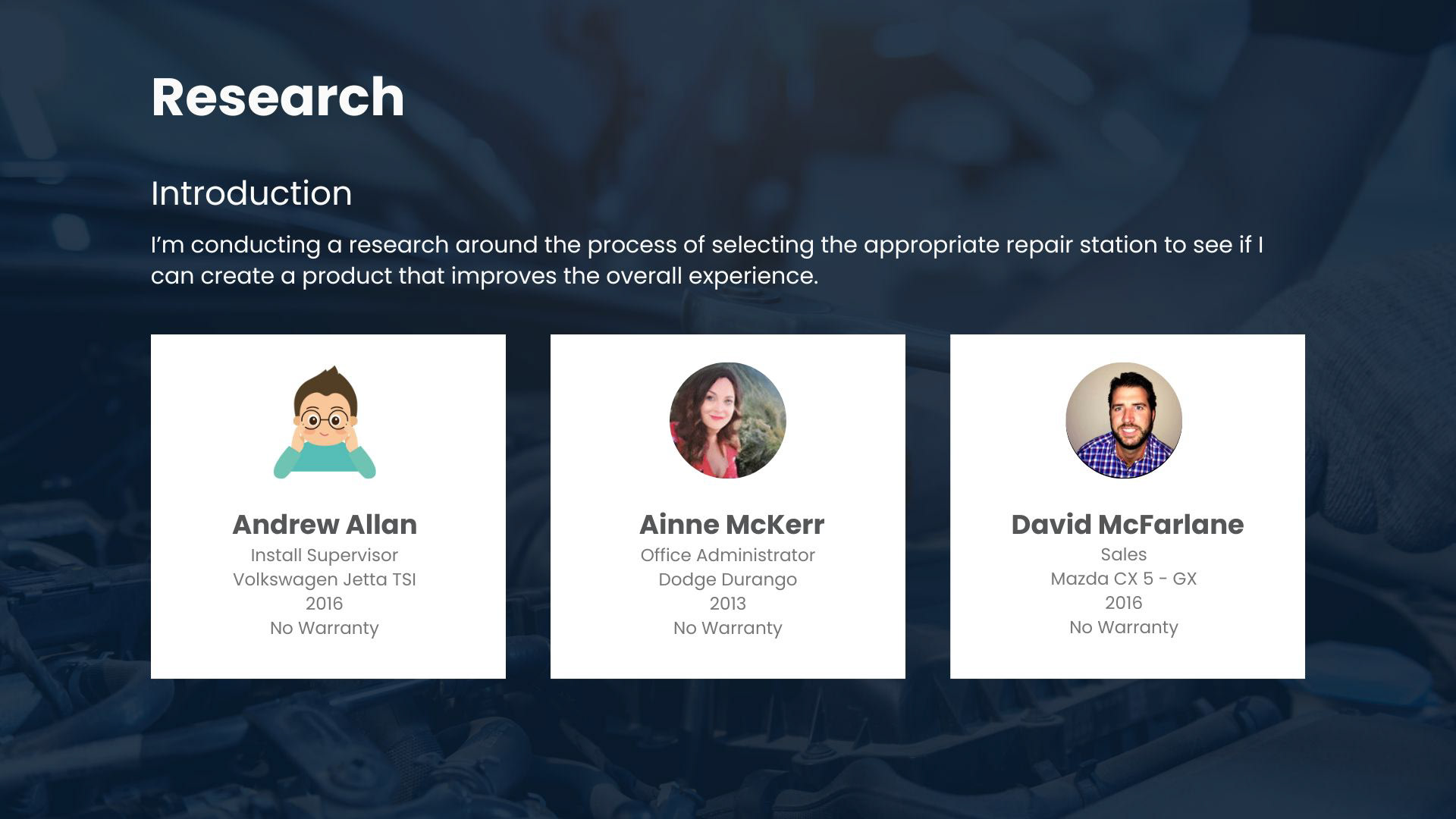
Three out-of-warranty vehicle owners were interviewed about their latest repair experience, how they evaluate shops, and how comparison tools influence their choices.
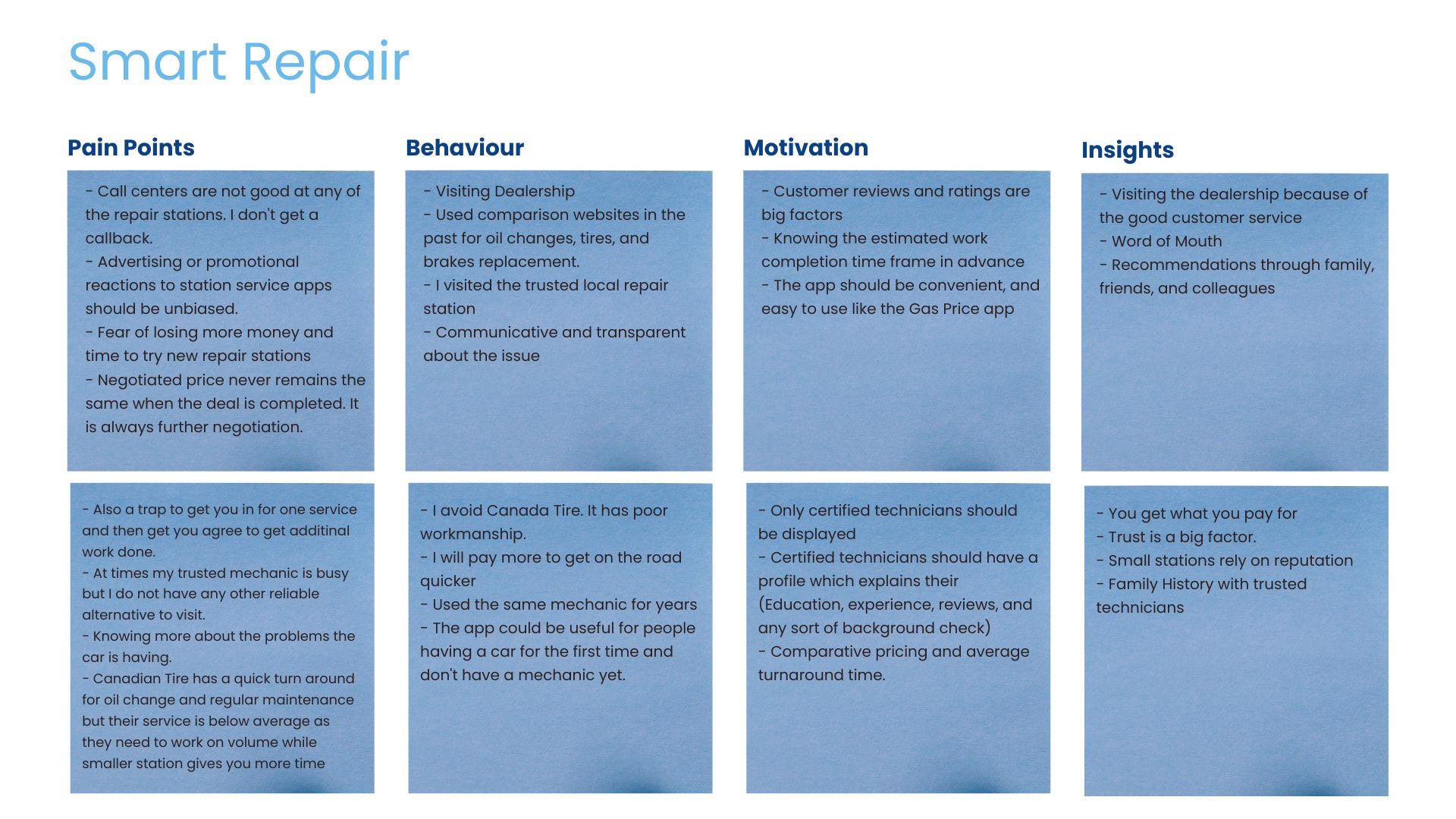
Price drift creates anxietyUsers feared a low initial quote would grow after the vehicle was already in the shop.
Reputation is a safety signalReviews, certification, experience, and personal recommendations reduced perceived risk.
Time matters alongside costParticipants wanted the estimated completion window before committing to a provider.
Alternatives are hard to findWhen a trusted mechanic was unavailable, users had no reliable backup and defaulted to familiar options.
Research boundary: this was a small formative sample intended to expose patterns and shape a testable concept—not to claim market-wide validation.
Three Smart Repair research participants
Participant setThree drivers · all without repair warranties
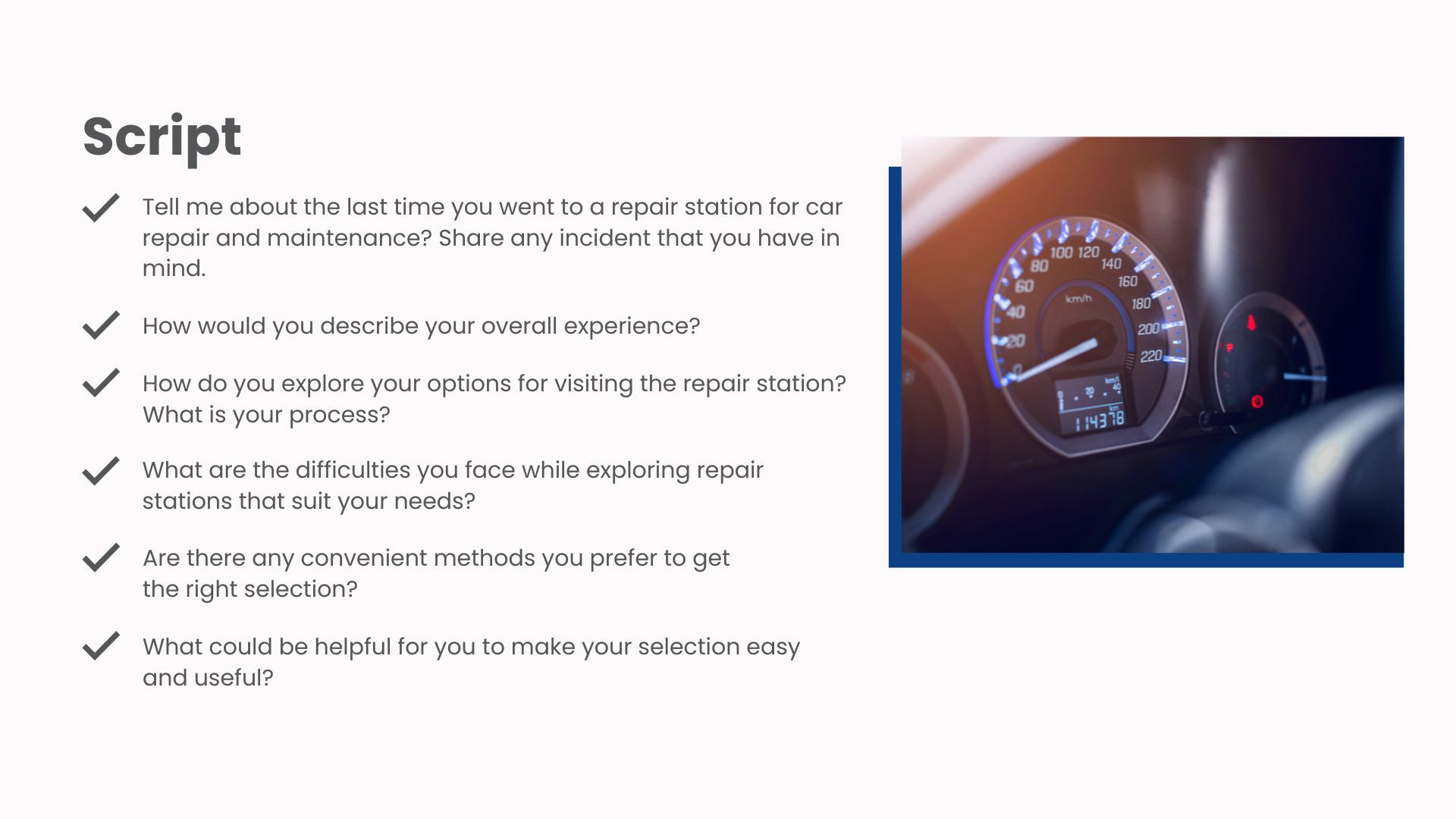
First half of the Smart Repair interview guide
Interview guideExperience and selection behaviour
Second half of the Smart Repair interview guide
Interview guideComparison habits and expectations
Research synthesis organized into pain points, behaviours, motivations, and insights
Research synthesisPain points → behaviours → motivations → insights
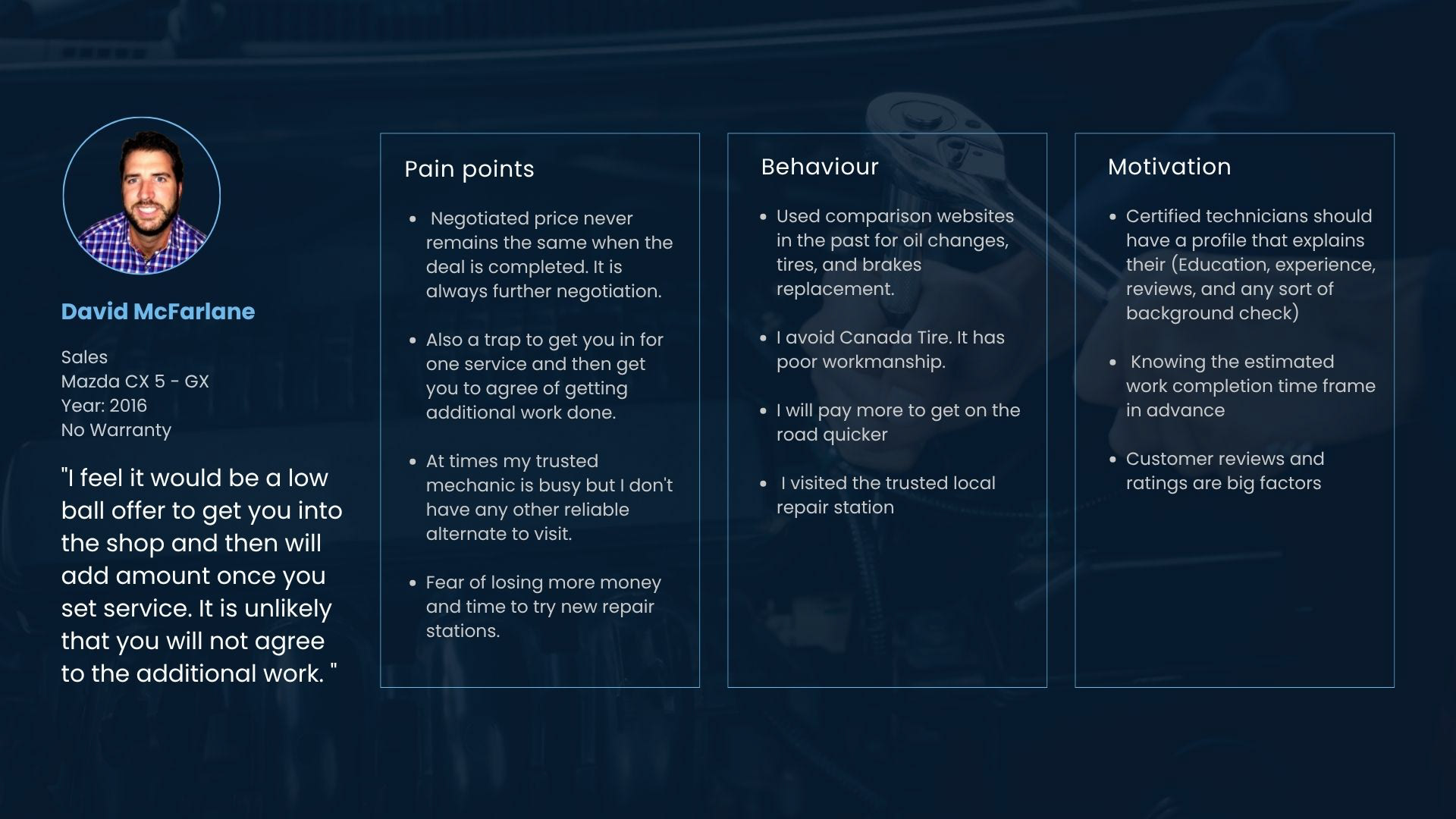
Detailed research profile for participant David McFarlane
Participant snapshotConnecting verbatim feedback to product requirements
03 · Structure the experience

Two entry paths, one comparison decision

The information architecture supported service-led discovery and a trust-led “Top 5 Technicians” route. Both paths converged on location-aware profiles that users could save or compare.

Information architecture

Let users start with what they already know

Some drivers know the service they need; others only know they want a reputable technician. The home screen gives both mental models a direct starting point.
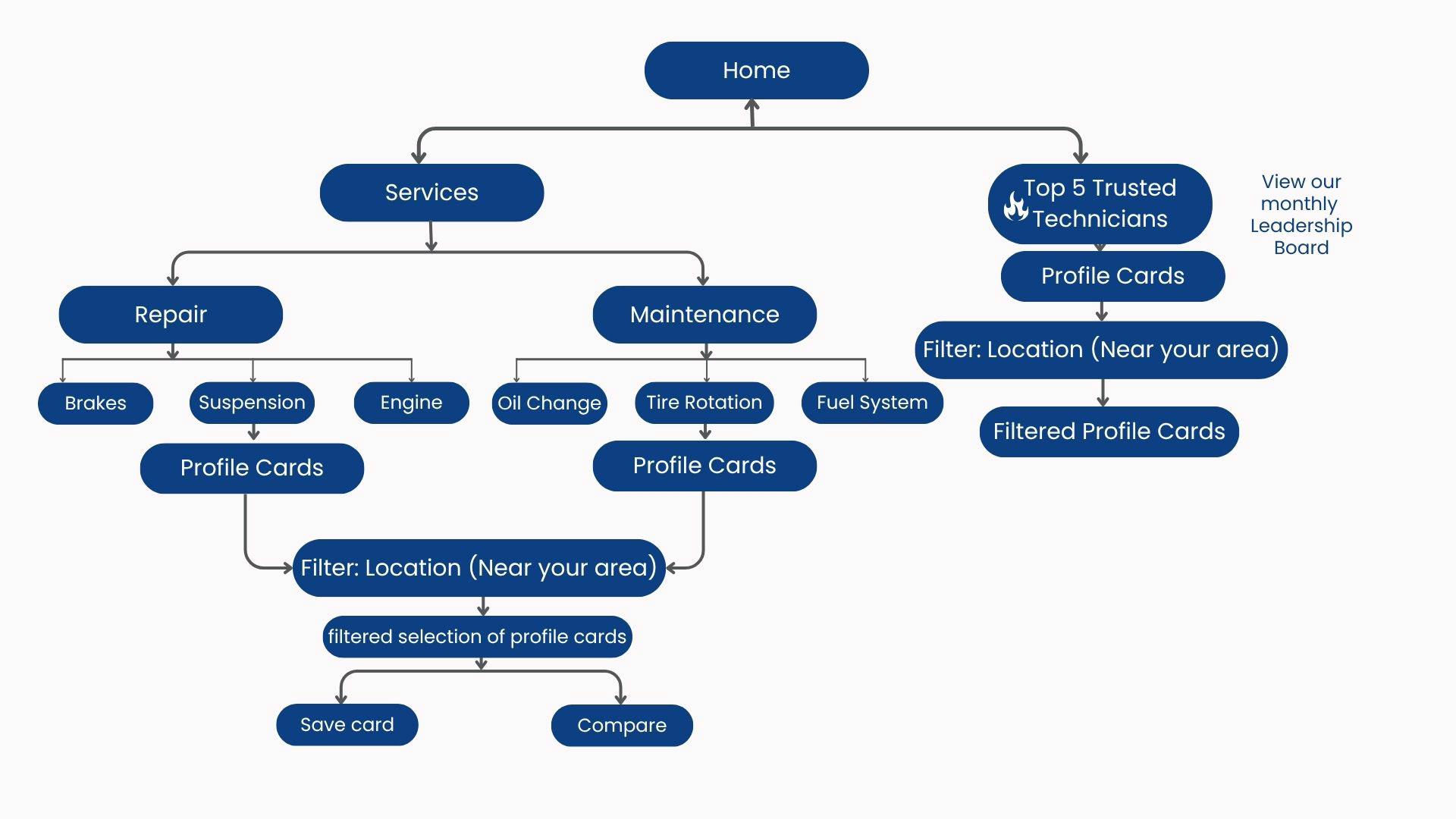
  • Search or browse common repair and maintenance services
  • Explore a ranked technician list
  • Filter profiles to the user’s area
  • Save candidates or add them to a comparison list
Smart Repair information architecture
Information architectureService-led and trust-led discovery
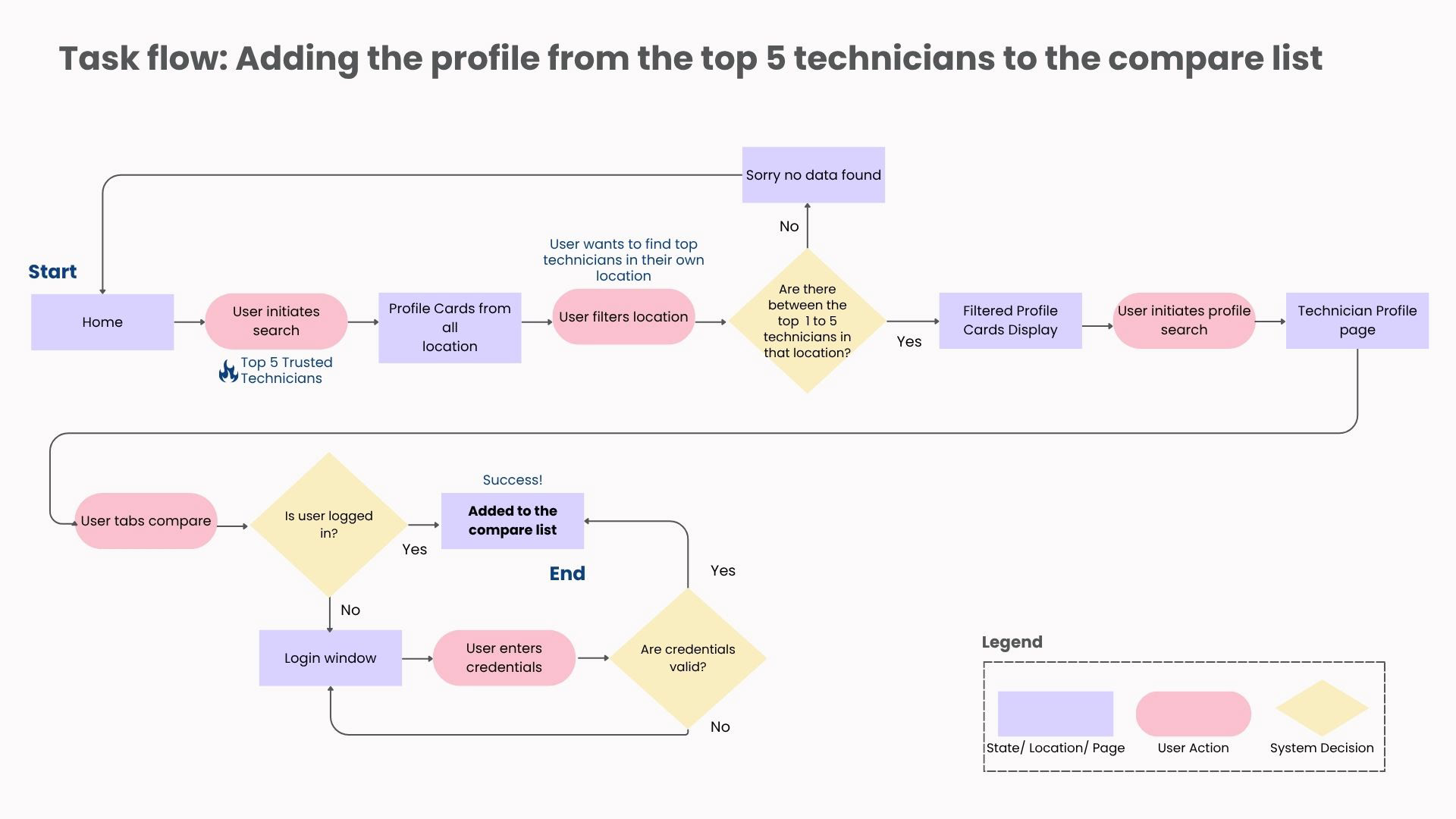
Original task flow for adding a technician profile to compare
Original task flowFirst-pass logic and authentication paths
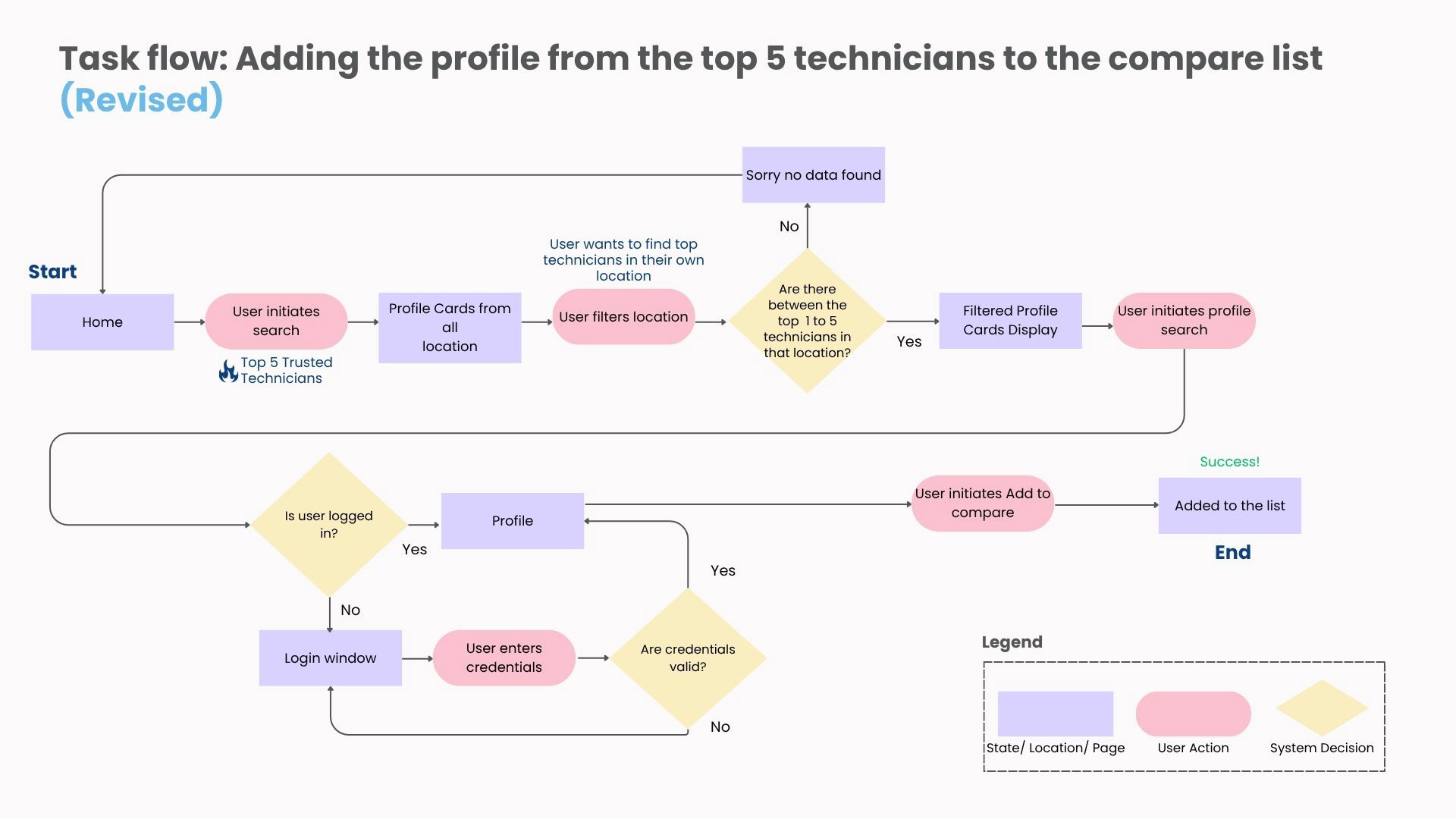
Revised task flow for adding a technician profile to compare
Revised task flowClearer profile context and comparison sequence
04 · Prototype and iterate

Wireframes tested search clarity, local relevance, and trust cues

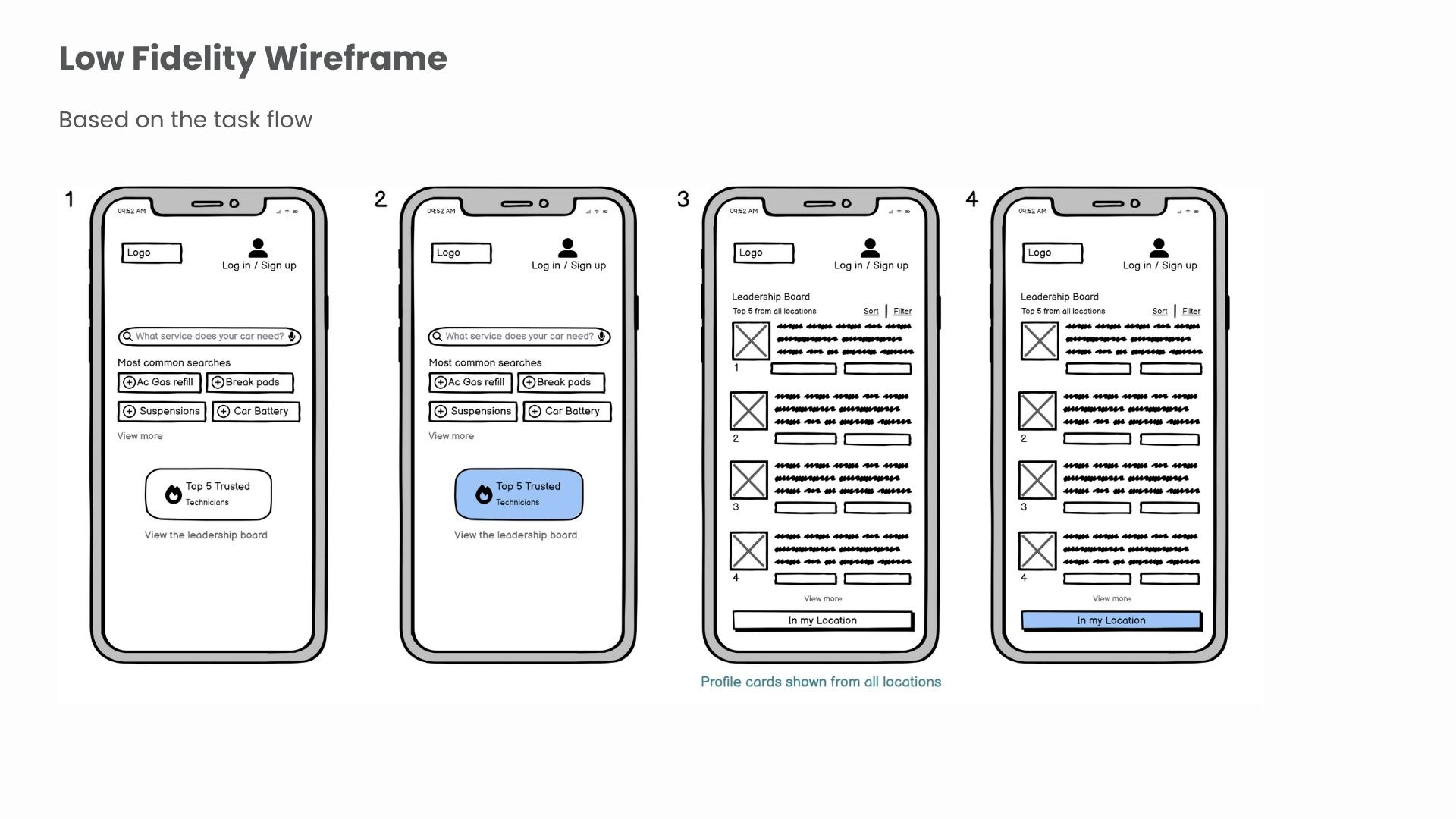
The low-fidelity prototype moved from home-page discovery through location filtering, technician profiles, comparison, and authentication states. Feedback informed clearer search suggestions, quick-service tags, location controls, and verified achievement badges.
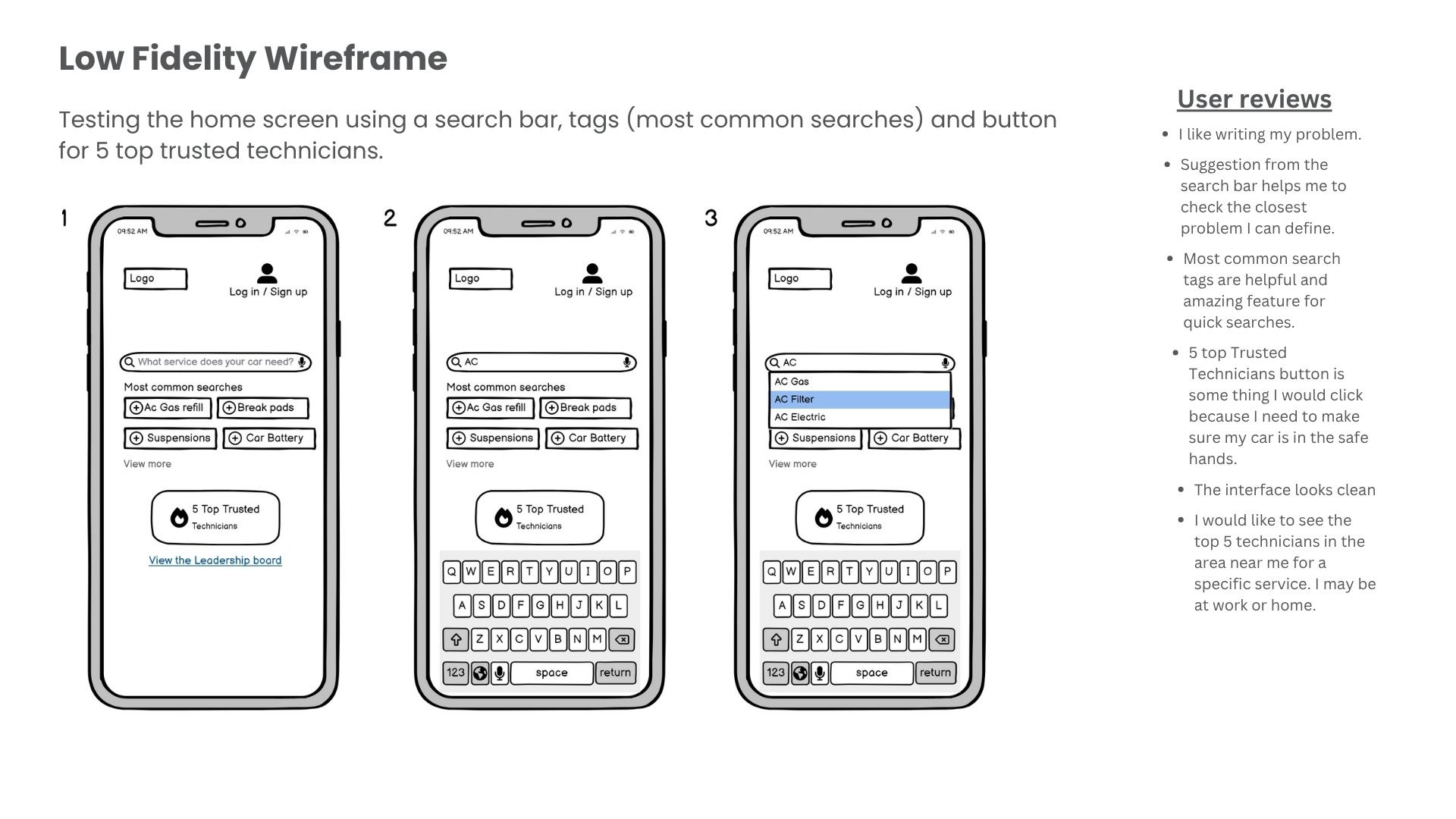
Home search wireframes and user feedback
Home and searchQuick tags, suggestions, and top-technician entry point
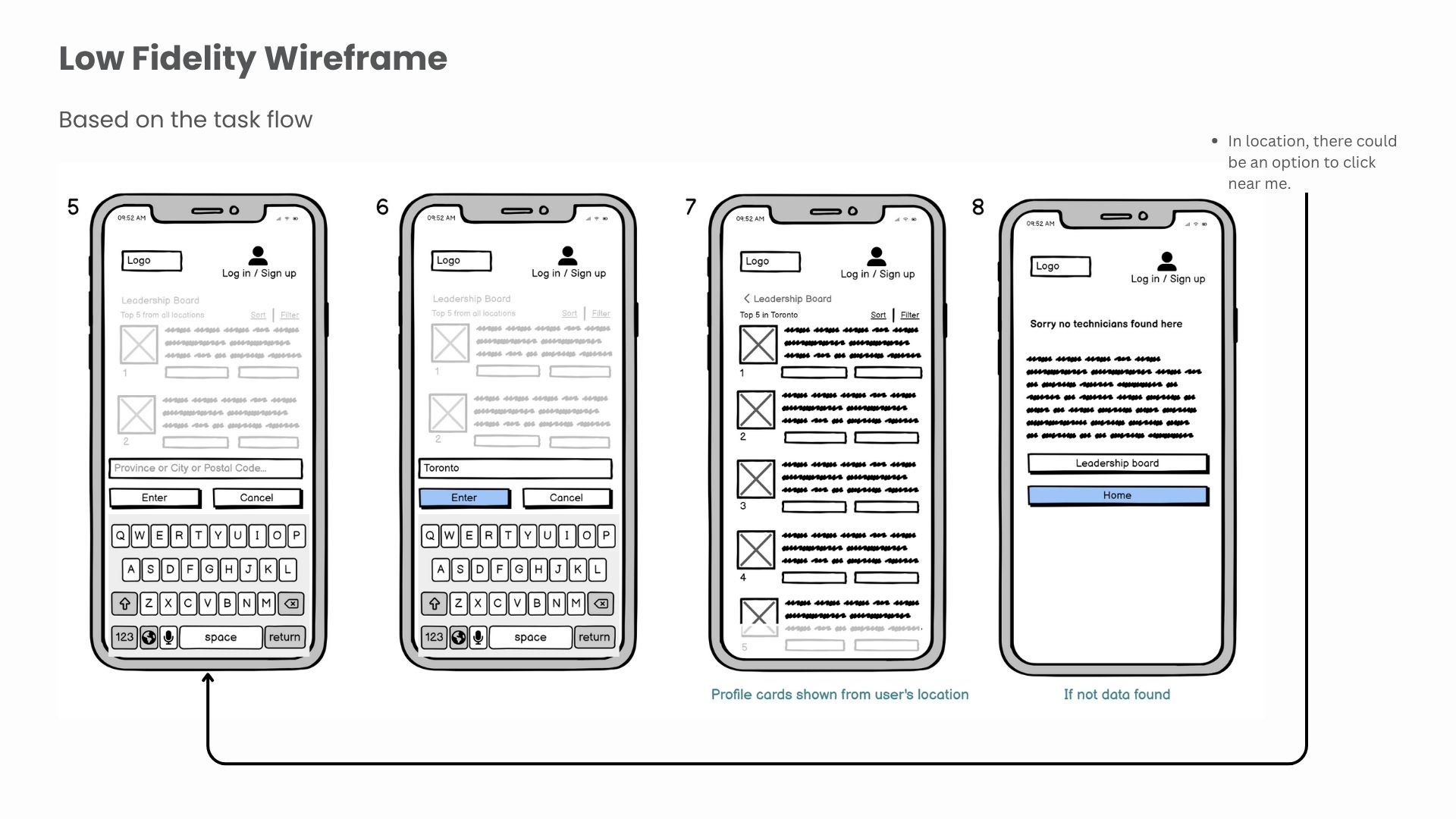
Technician leaderboard wireframes
Leaderboard entryFrom all locations to local relevance
Location filter and empty-state wireframes
Location and empty statesSupporting both success and no-result paths
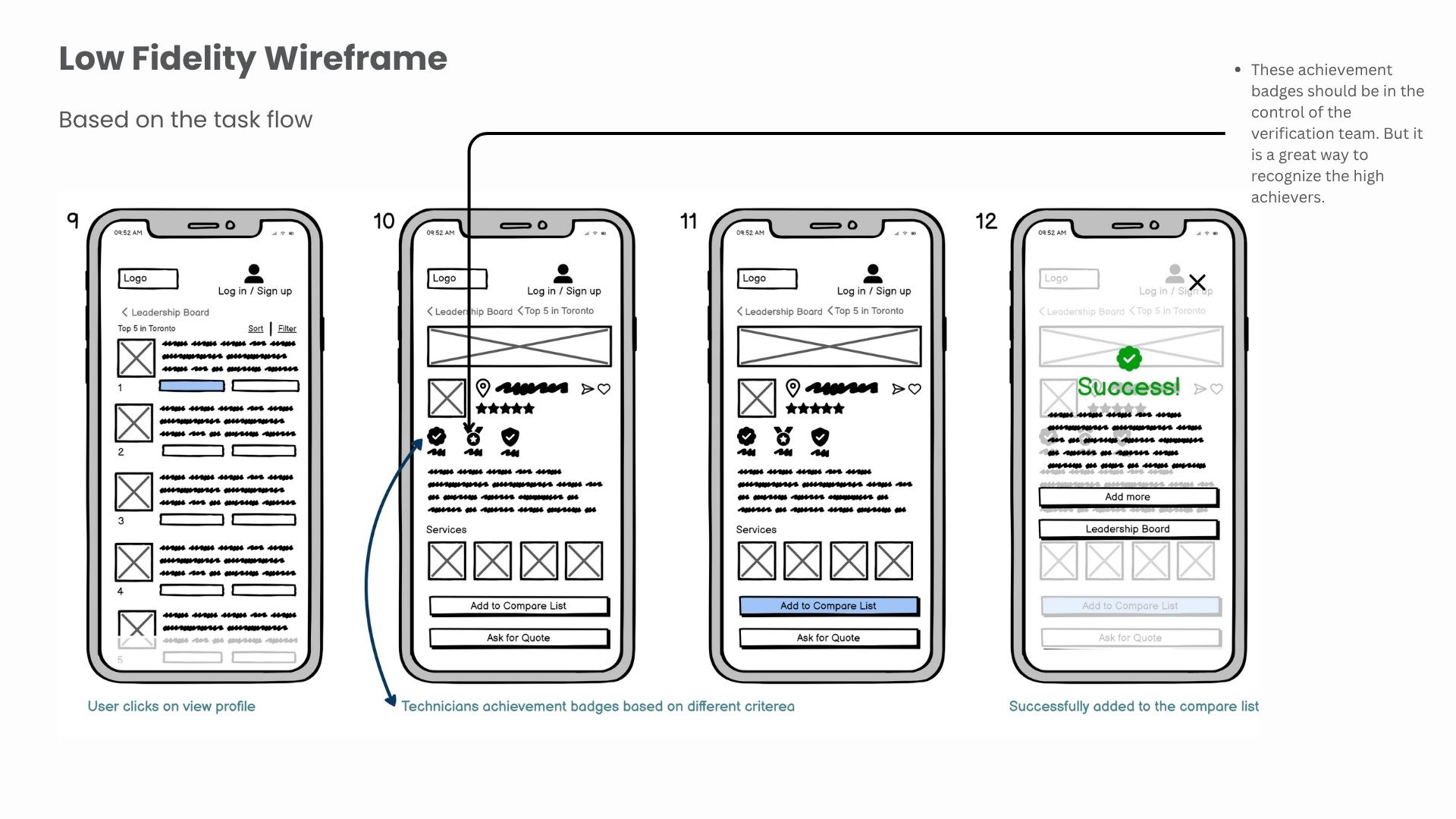
Technician profile and compare-list wireframes
Profile evaluationCredentials, services, badges, and compare action
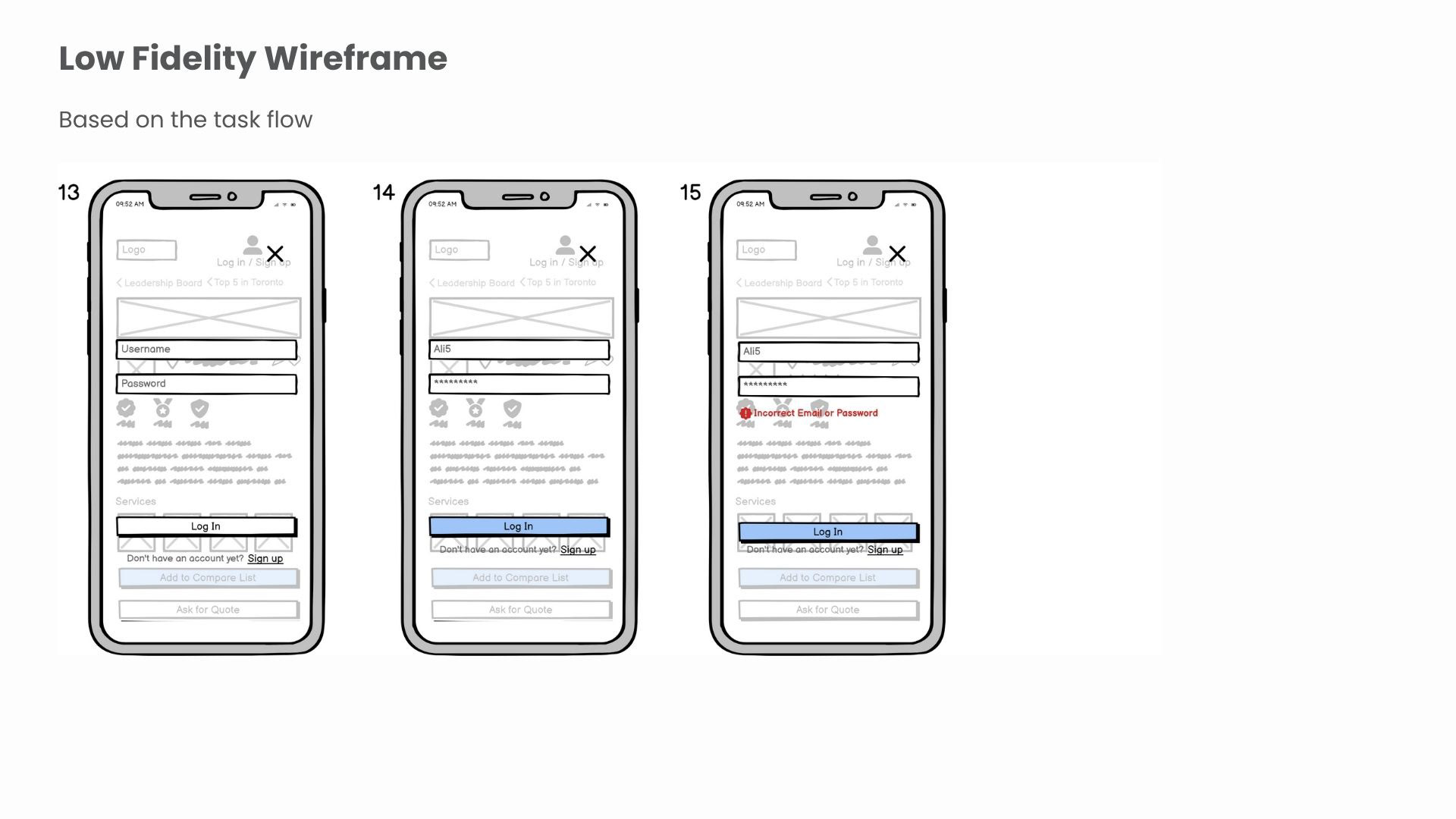
Login and authentication-error wireframes
Authentication statesLogin, error feedback, and return to task
05 · Final interface

A focused mobile UI built around fast scanning and credible comparison

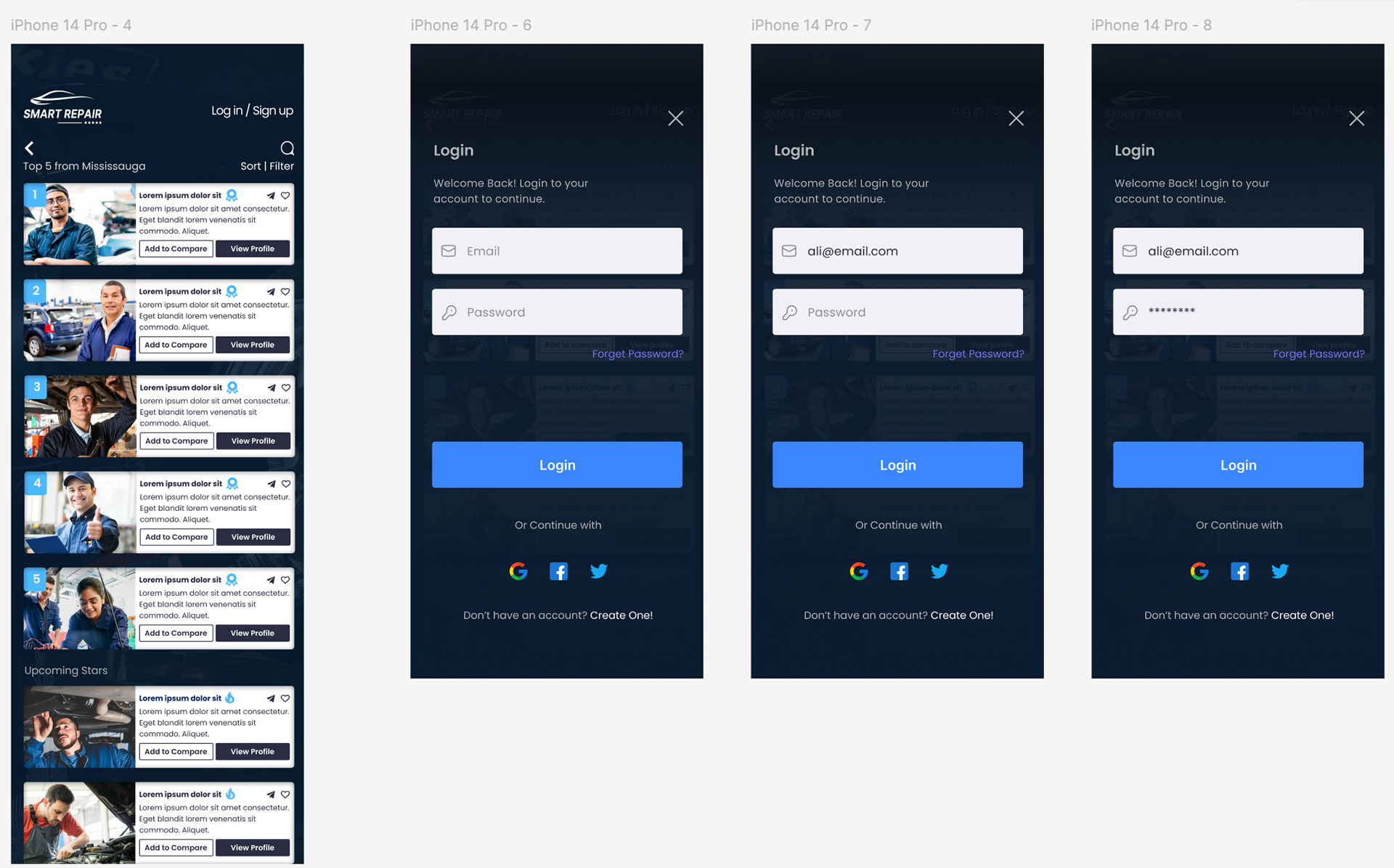
The visual system uses a dark automotive palette, high-contrast actions, familiar service shortcuts, ranked technician cards, and progressive disclosure for location and login.
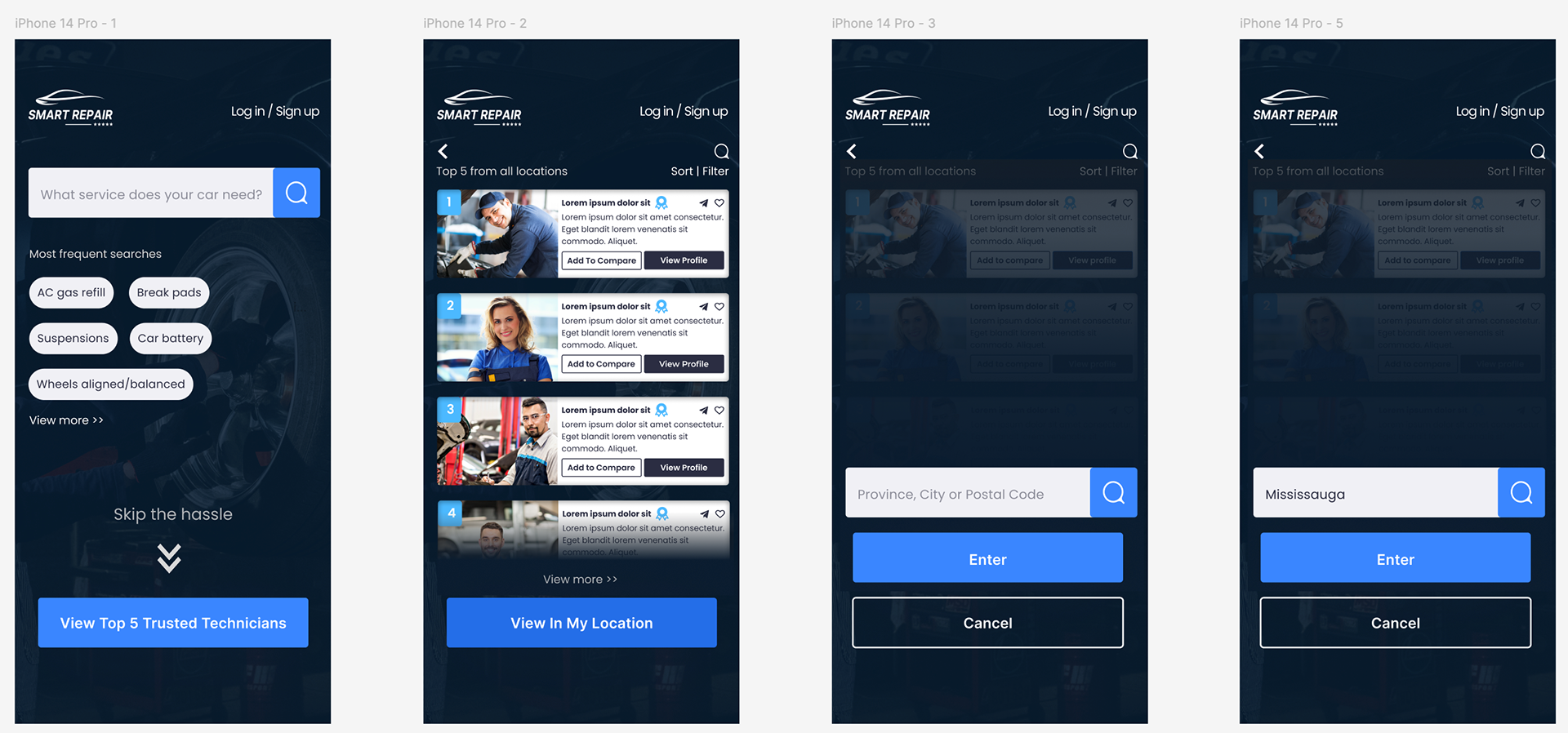
Smart Repair high-fidelity home, technician list, and location screens
Discovery and location flowHome → ranked list → local results
Smart Repair high-fidelity local technician list and login screens
Local results and authenticationPreserving task context through login

Explore the complete prototype

06 · Outcome and next steps

From a trust problem to a testable product direction

The concept turns repair discovery into a more legible decision: users can begin with a need, compare structured provider information, narrow by location, and preserve promising options.

Design status: Smart Repair is a research-informed concept shaped by three exploratory interviews and prototype feedback. The next step is to test task completion, comparison clarity, and trust with a broader participant group. Conversion outcomes would need a live product and a defined measurement period.
What the design establishesA coherent end-to-end flow from service discovery to technician comparison.
What should be tested nextComprehension of ranking criteria, comparison usefulness, trust in certification signals, and completion of a location-filtered search.
Planned product expansionIssue reporting, guided diagnostics, quote collection, and direct repair booking.
Research expansionBroaden the participant pool, include repair providers, and validate how pricing ranges and ranking logic should be communicated.
Continue exploring

More selected design work